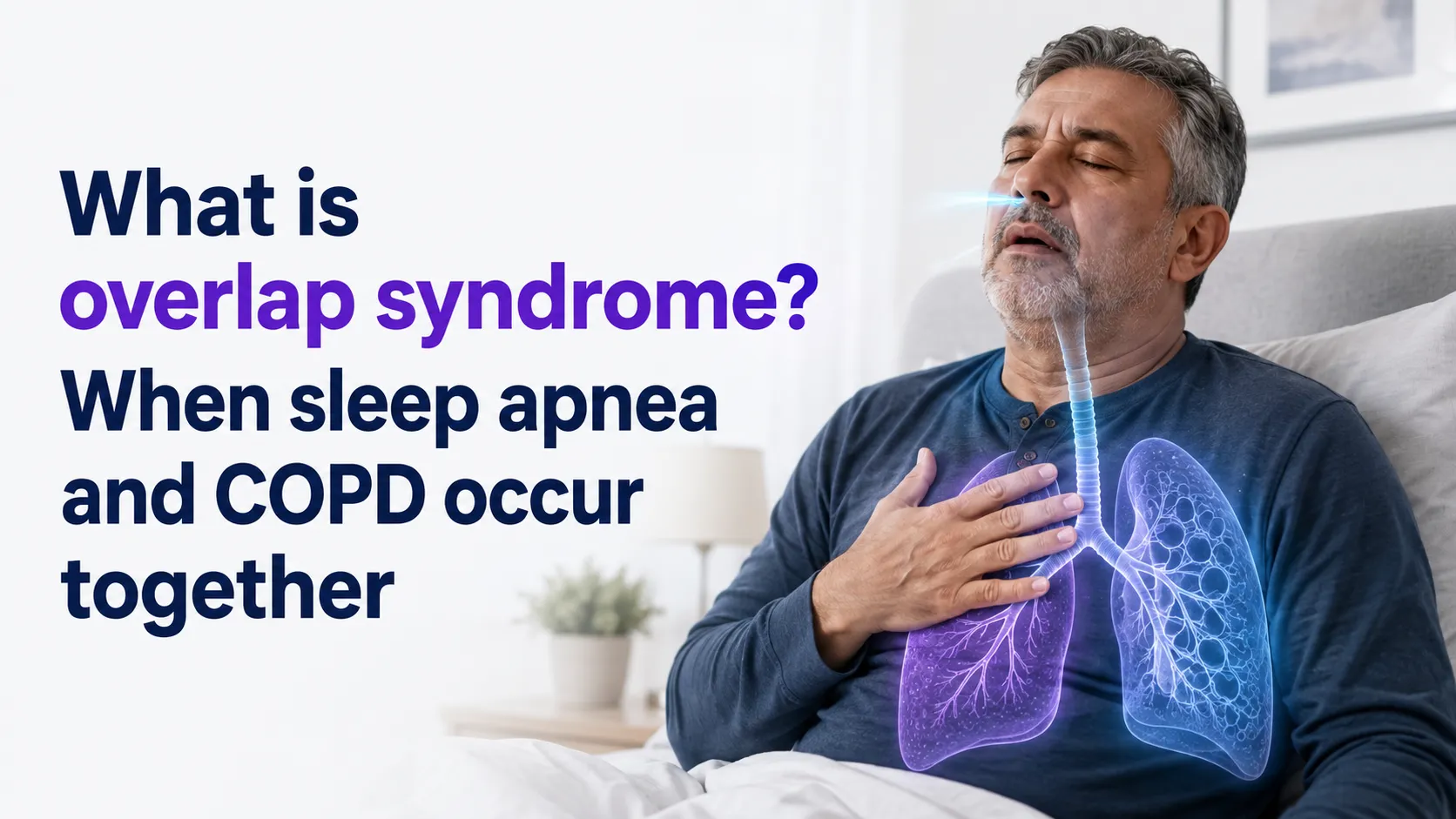
Overlap syndrome is when sleep apnea and COPD occur together. Here is what it means, why it matters, and what treatment looks like.
Sleep apnea and Chronic Obstructive Pulmonary Disease (COPD) are both common breathing problems on their own. What is less understood is what happens when someone has both at the same time.
That combination has a name. It is called overlap syndrome, and the research shows it is meaningfully more serious than either condition alone.
Here is what overlap syndrome is, who tends to develop it, and why the two conditions together produce outcomes that neither one produces separately.
What is overlap syndrome?
Overlap syndrome is the coexistence of obstructive sleep apnea and chronic obstructive pulmonary disease in the same person.
The term was coined by David Flenley in 1985 to describe the association between OSA and other chronic respiratory conditions, particularly COPD.³ Since then, "overlap syndrome" has come to refer specifically to the combination of OSA and COPD, which is the most clinically significant and well-studied pairing.
Both conditions affect breathing but in different ways. OSA involves the upper airway collapsing during sleep, causing repeated pauses in breathing. COPD involves progressive damage to the lungs and small airways, usually from smoking, that makes breathing progressively harder over time.
When both are present, the effects compound.
Overlap syndrome carries significantly worse health outcomes than either OSA or COPD alone.
The seminal 2010 study by Marin et al. in the American Journal of Respiratory and Critical Care Medicine tracked untreated overlap syndrome patients and found they had a 42.2 percent all-cause mortality rate over a median follow-up of about 9 years, compared to 24.2 percent for patients with COPD alone.¹ The overlap syndrome patients were also 70 percent more likely to be hospitalized for COPD exacerbation than COPD-only patients.¹
The added risk comes from the way the two conditions interact. OSA causes repeated drops in blood oxygen during sleep, and COPD causes chronically low blood oxygen even during normal breathing. When both happen at once, oxygen levels drop further and stay lower for longer periods overnight.⁴
This nocturnal hypoxemia (low blood oxygen during sleep) is associated with atrial fibrillation, right heart strain, pulmonary hypertension, and increased cardiovascular mortality.³ Overlap syndrome essentially amplifies the risks of each condition through this shared mechanism.
Overlap syndrome is more likely in people who have risk factors for both OSA and COPD.
Common shared risk factors include:
The overlap is also more common in patients who were smokers, since smoking damages both the upper airway soft tissues (increasing OSA risk) and the lungs themselves (causing COPD).²
The symptoms of overlap syndrome combine the classic signs of both conditions, and often make each set of symptoms more severe.
From the OSA side:
From the COPD side:
When both are present, patients often report:
The overlap makes each symptom set harder to manage, and patients often feel worse than the individual severity of either condition would predict.⁴
Overlap syndrome requires diagnosing both conditions separately.
For COPD, diagnosis involves pulmonary function testing (spirometry) to measure how well the lungs move air, along with clinical evaluation of symptoms, smoking history, and imaging when needed.²
For OSA, diagnosis requires a sleep study, either in a sleep lab (polysomnography) or at home (home sleep apnea test), that measures breathing events during sleep and produces an apnea-hypopnea index.
Because the two conditions can mask each other, sleep physicians and pulmonologists often need to work together when they suspect overlap syndrome. A COPD patient with worse-than-expected symptoms may warrant a sleep study. An OSA patient with a smoking history or persistent shortness of breath may warrant pulmonary function testing.
The diagnosis matters because treating one condition without the other leaves significant risk on the table.
Overlap syndrome treatment addresses both conditions simultaneously, and the evidence for combined treatment is unusually strong.
CPAP therapy for the OSA component. Continuous positive airway pressure keeps the upper airway open during sleep and prevents the repeated oxygen drops that cause much of the additional cardiovascular risk in overlap syndrome. A 2010 study found that overlap syndrome patients treated with CPAP had no increased mortality risk compared to COPD-only patients, while untreated overlap syndrome patients had significantly higher mortality.¹ A 2023 systematic review confirmed that CPAP therapy improves COPD exacerbations, hospitalizations, and mortality outcomes in overlap syndrome patients.⁵
COPD management for the pulmonary component. This typically includes bronchodilators, inhaled corticosteroids when indicated, pulmonary rehabilitation, smoking cessation, and supplemental oxygen therapy for patients with chronic hypoxemia.²
Bilevel positive airway pressure (BiPAP) may be preferred over CPAP for patients with more severe COPD, particularly those with hypercapnia (elevated carbon dioxide levels), since BiPAP supports both inhalation and exhalation.²
Weight loss, smoking cessation, and lifestyle changes benefit both conditions and are recommended alongside device-based therapy.
Additional research has shown that greater CPAP adherence is associated with reduced mortality in overlap syndrome patients, meaning more consistent nightly use produces better outcomes.⁶ The consistent theme in the research is that untreated overlap syndrome carries the highest risk, and treating both conditions together produces meaningfully better outcomes than treating either alone.
If you have COPD and also experience symptoms of OSA (loud snoring, daytime fatigue, waking up gasping), it is worth discussing sleep testing with your pulmonologist. The two specialties, sleep medicine and pulmonology, often coordinate on these cases.
If you have OSA and also have a smoking history, chronic cough, or persistent shortness of breath, discussing pulmonary function testing with your primary care doctor or sleep physician is a reasonable step.
The overlap is common enough that neither specialty typically assumes the other condition is not present. But since the diagnostic tests for OSA and COPD are different, both usually need to be ordered separately.
Overlap syndrome is the coexistence of obstructive sleep apnea and COPD, and it carries significantly higher risks of mortality, hospitalization, and cardiovascular disease than either condition alone.
The good news is that treatment works. CPAP therapy for the sleep apnea component, combined with standard COPD management, has been shown to bring the risk of overlap syndrome patients close to that of COPD-only patients in the studies that have measured this directly.¹
The challenge is recognition. Because the two conditions can mask each other, many patients with overlap syndrome go undiagnosed for years. Anyone with either condition who feels worse than the individual diagnosis would predict has a reason to explore whether the other one might also be present.
If you have not been formally evaluated for sleep apnea and are wondering whether it might be part of what you are experiencing, the FaceX AI selfie experience by Soliish uses facial analysis and a short set of questions to help you learn about factors related to your sleep and think through what to discuss with a qualified healthcare professional.