Snoring can feel like a small problem until it starts stealing sleep from you, your partner, or both. The good news is that in many cases it’s fixable.
Snoring can feel like a small problem until it starts stealing sleep from you, your partner, or both. The good news is that in many cases it’s fixable.
This guide walks you through what causes snoring, whether snoring is unhealthy, and how you can stop snoring using lifestyle changes, easy home aids, and medical treatments when needed.
What is snoring?
Snoring is the sound you make when air can’t flow freely through your upper airway during sleep.
As your throat muscles relax, the airway narrows and the soft tissues at the back of your mouth and throat start to vibrate.
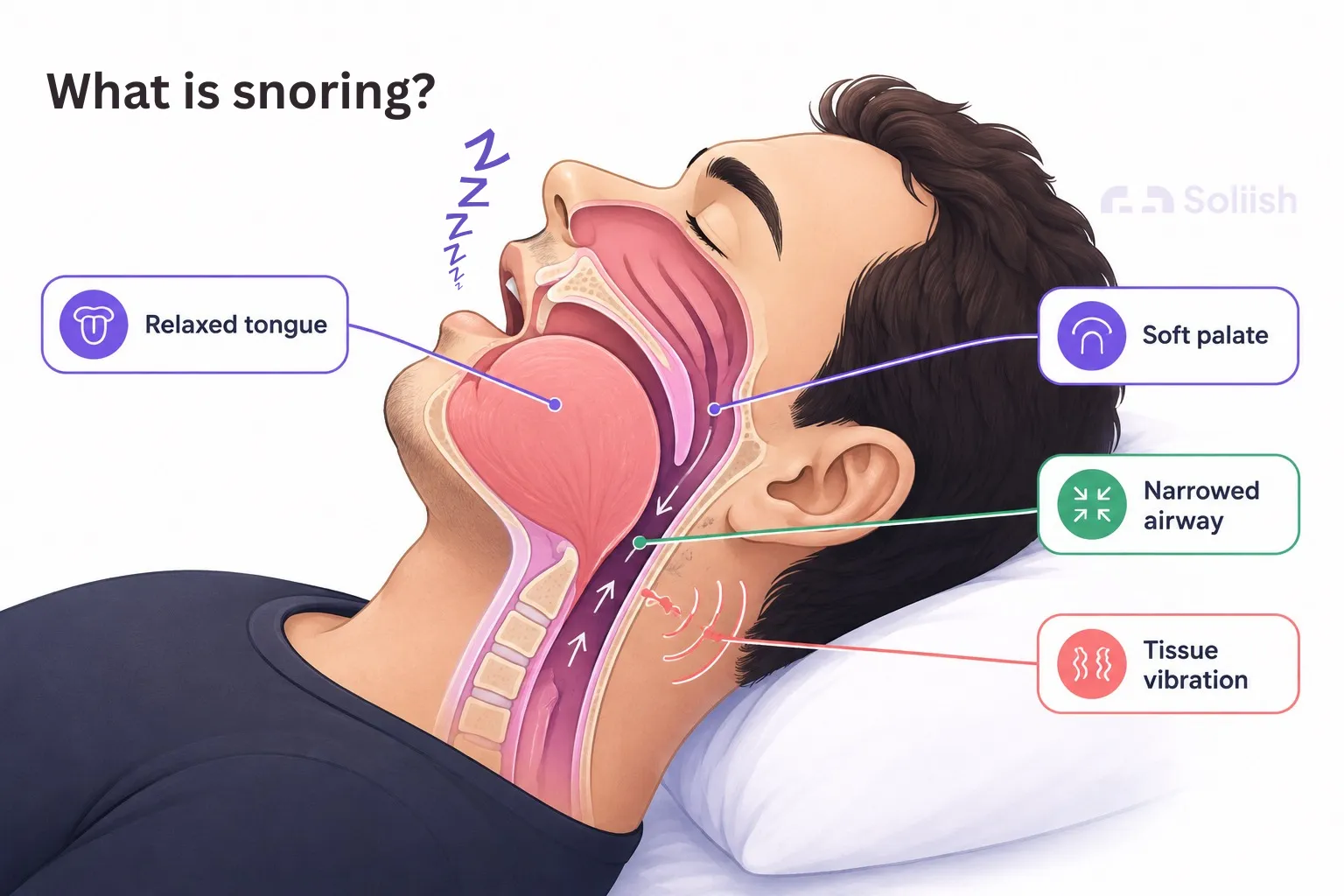
Snoring occurs when the upper airway becomes narrow or floppy during sleep. Usually there are a few causes working together, and fixing more than one often works better than fixing just one.
The causes include:
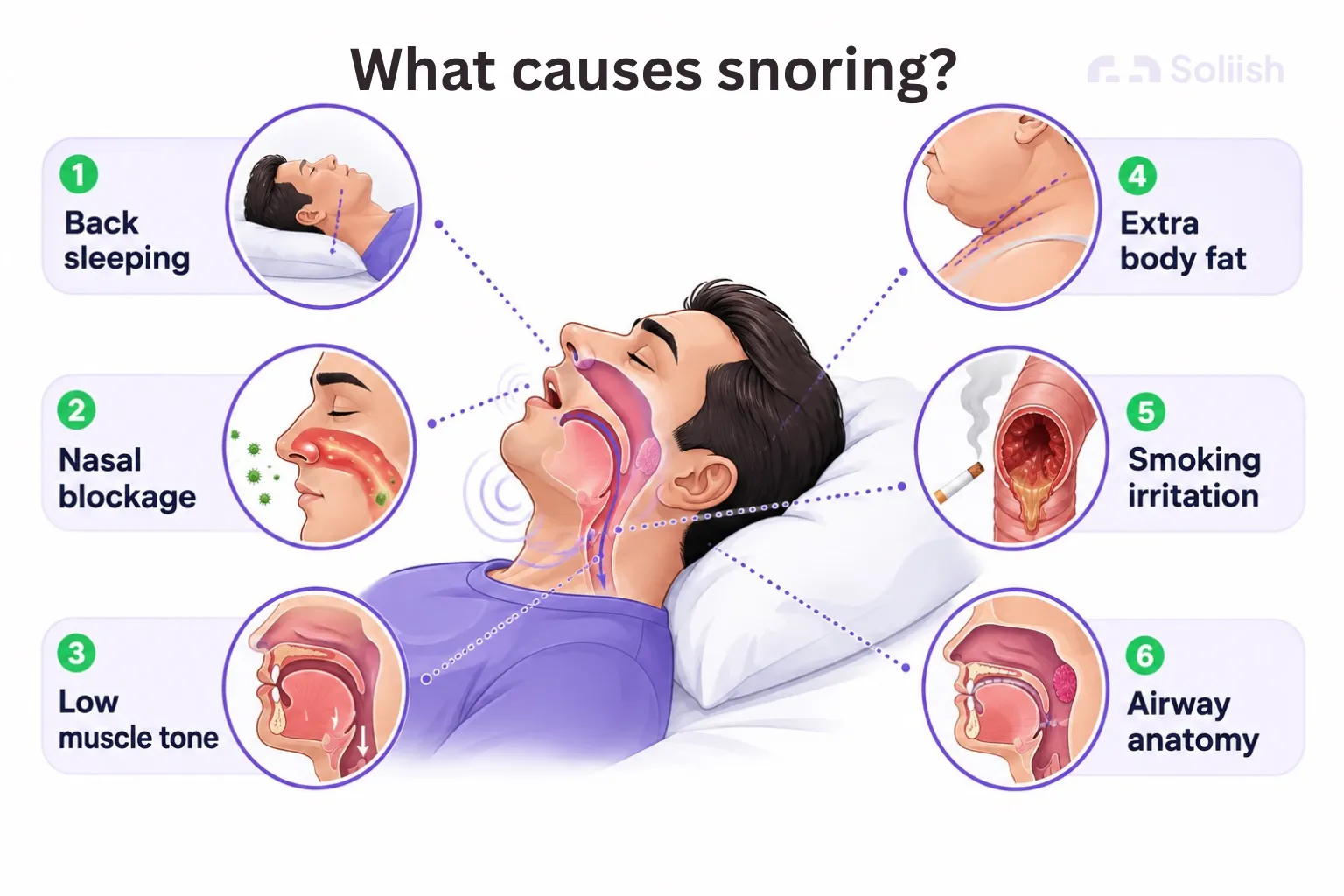
Addressing a combination of these causes usually gives better results than focusing on only one.
Other factors that can worsen snoring include sleep deprivation, aging, hormonal changes (like menopause or pregnancy), reflux, and certain medical conditions that affect airway size or muscle tone.
The best way to stop snoring is to follow a layered approach. Start with simple lifestyle changes, then add sleep-position fixes and home devices if needed and finally move to medical treatment if snoring is severe or linked to obstructive sleep apnea (OSA).
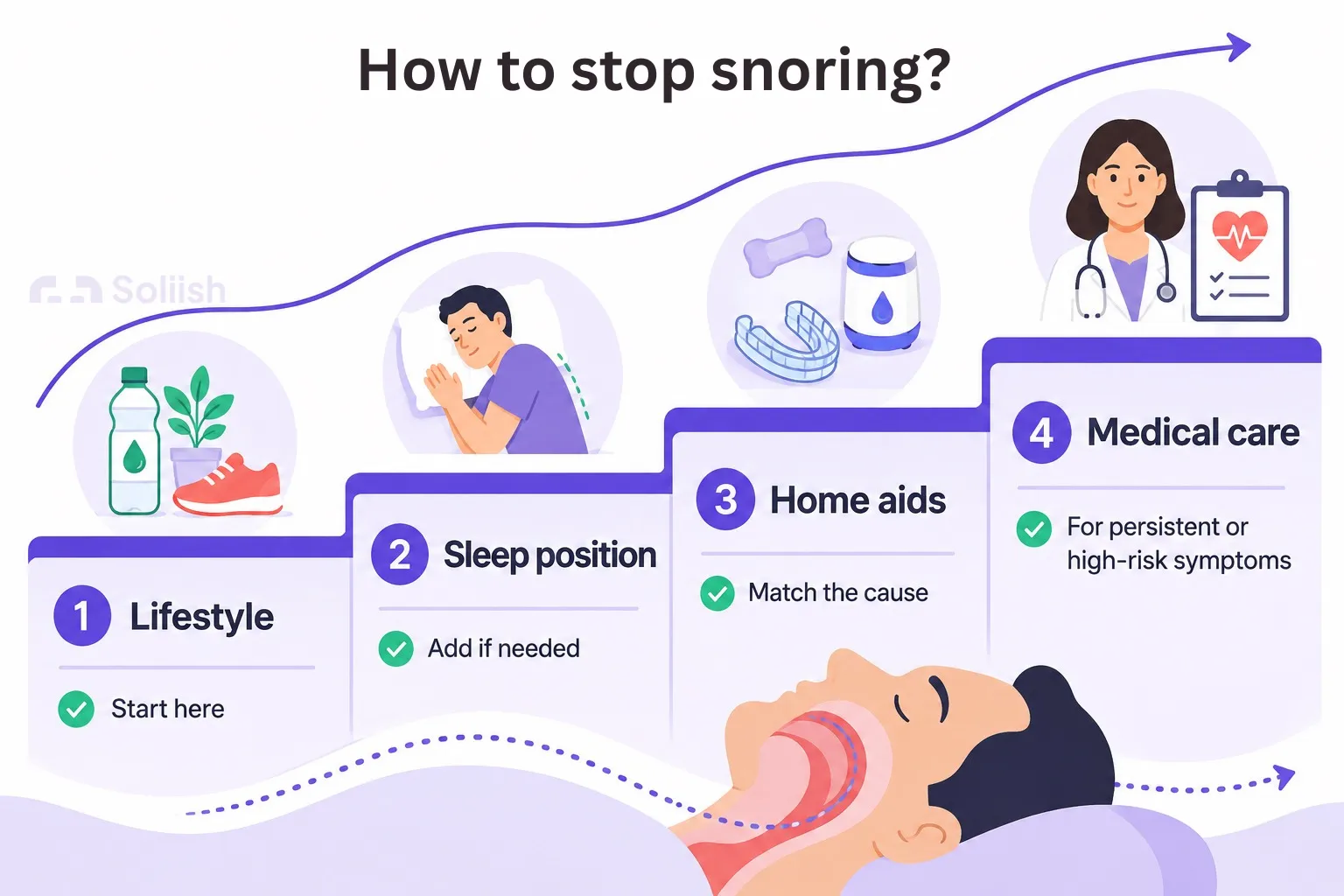
This step-by-step method works because it tackles the main problem behind snoring: a relaxed airway that becomes too narrow during sleep.
Lifestyle fixes
Lifestyle changes can make a big difference because they target factors that increase airway narrowing.
.webp)
Sleep-position & bedroom tweaks
Many people snore more because of gravity, especially when lying on their back. Positional therapy helps by keeping the airway more open.
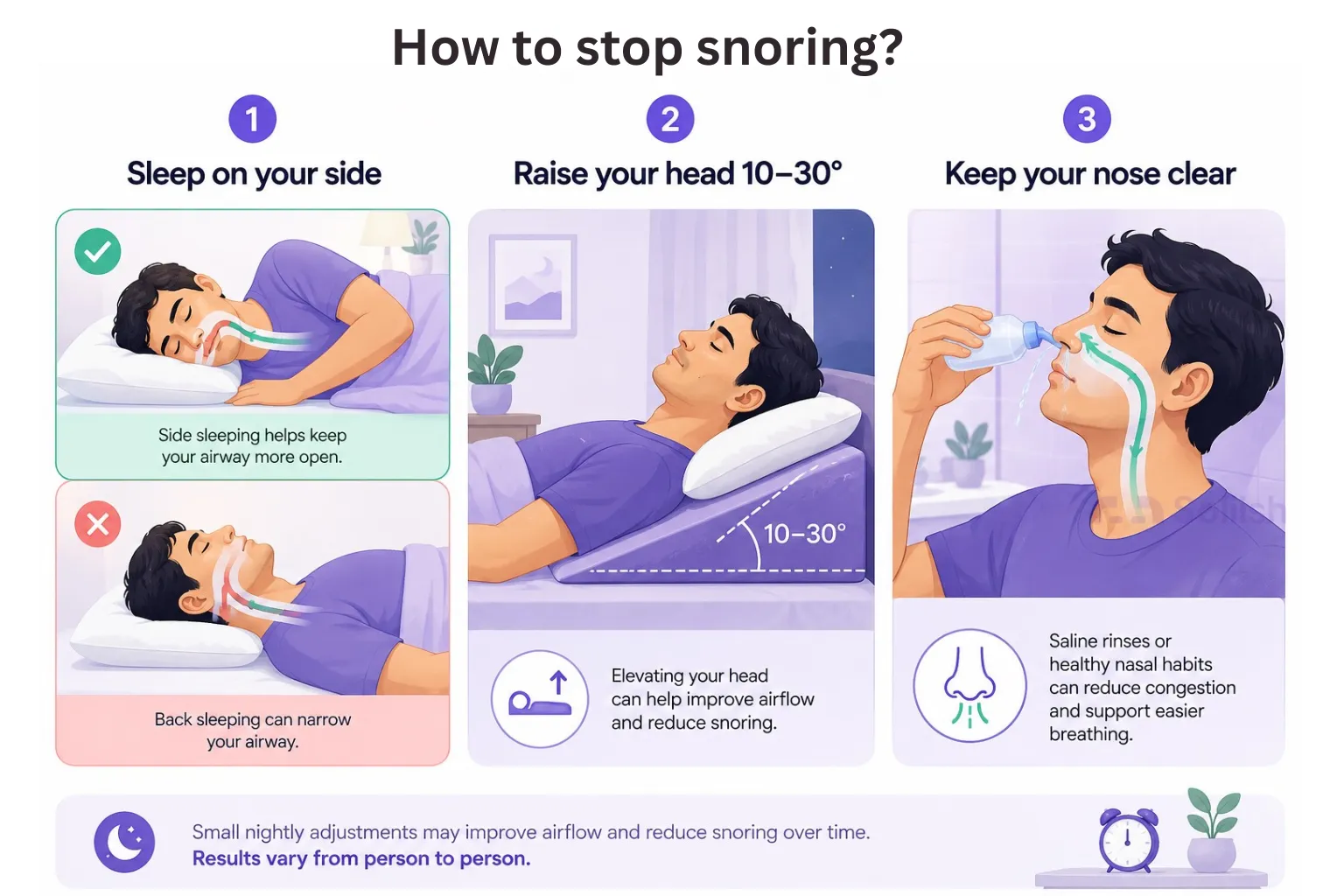
Devices & home aids
If snoring continues after the steps above, certain devices can help depending on the cause.
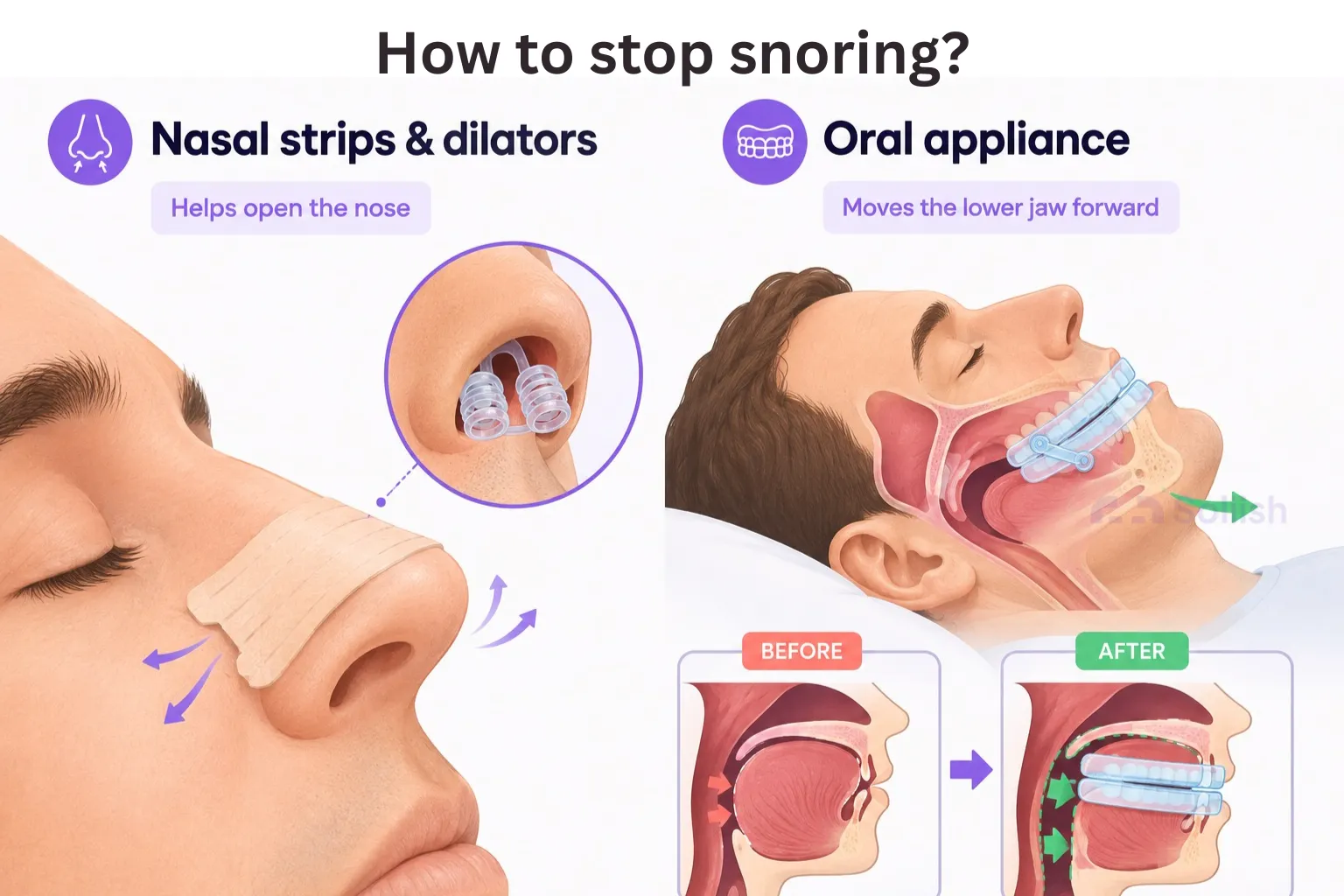
Medical treatments to stop snoring
If snoring is loud, persistent, or comes with warning signs of OSA (breathing pauses, gasping, strong daytime sleepiness), medical treatment may be needed.
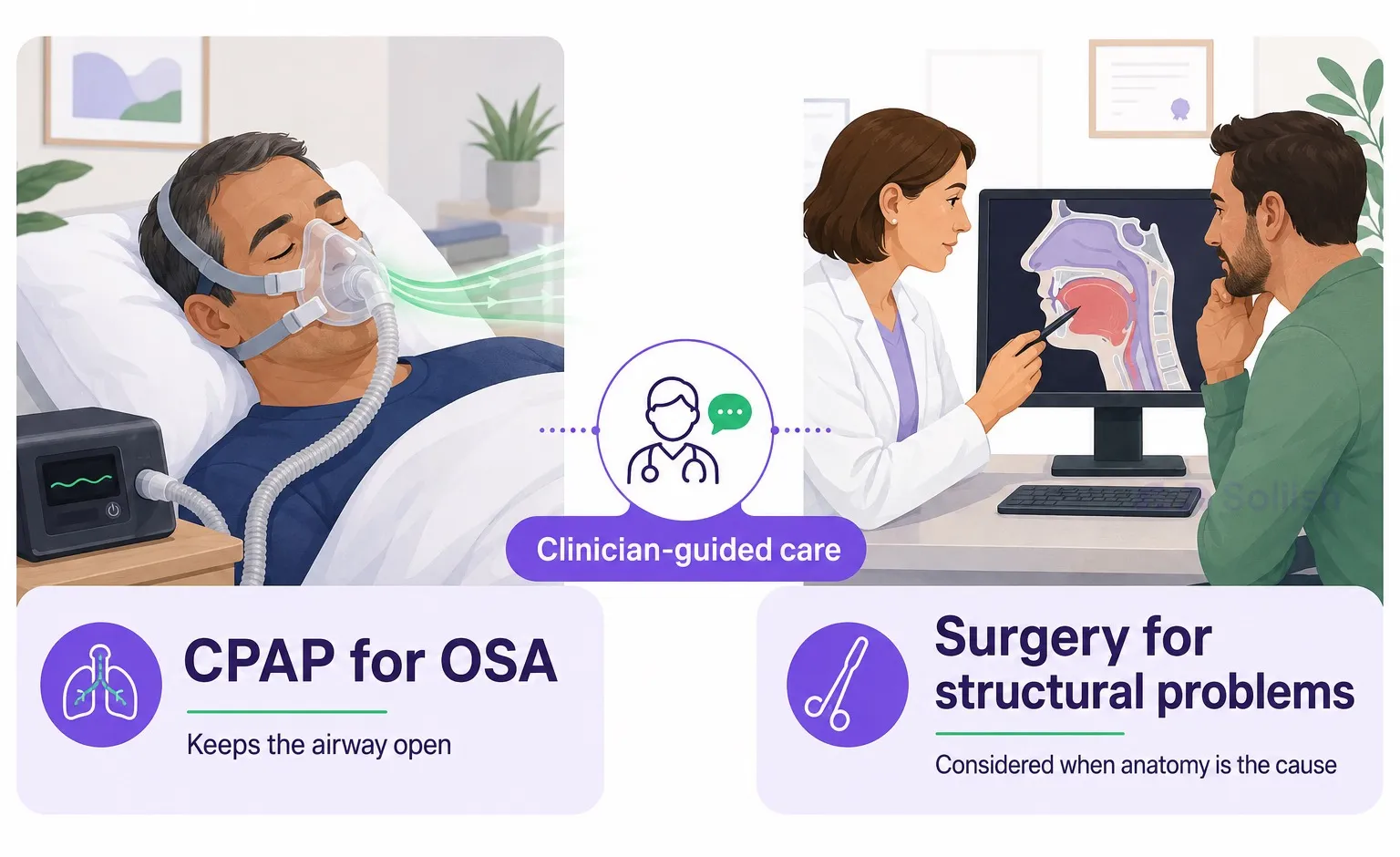
Primary snoring on its own usually isn’t dangerous, but it can still cause problems like dry mouth, a sore throat, or feeling sleepy during the day.
However, loud, regular snoring can be a sign of obstructive sleep apnea (OSA).
In OSA, the airway repeatedly collapses during sleep, causing brief drops in oxygen (hypoxemia) and short awakenings (arousals). Over time, this increases the risk of health issues such as high blood pressure, stroke (about 46% higher odds), heart attack–related deaths, asthma, and COPD.
.webp)
Even when snoring isn’t OSA, it can still break up sleep enough to cause fatigue, brain fog, poor focus, and relationship stress. Because long-term snoring can sometimes progress into OSA, persistent snoring is worth paying attention to.
You should see a doctor or get a sleep test (polysomnography) if you notice any of these signs:
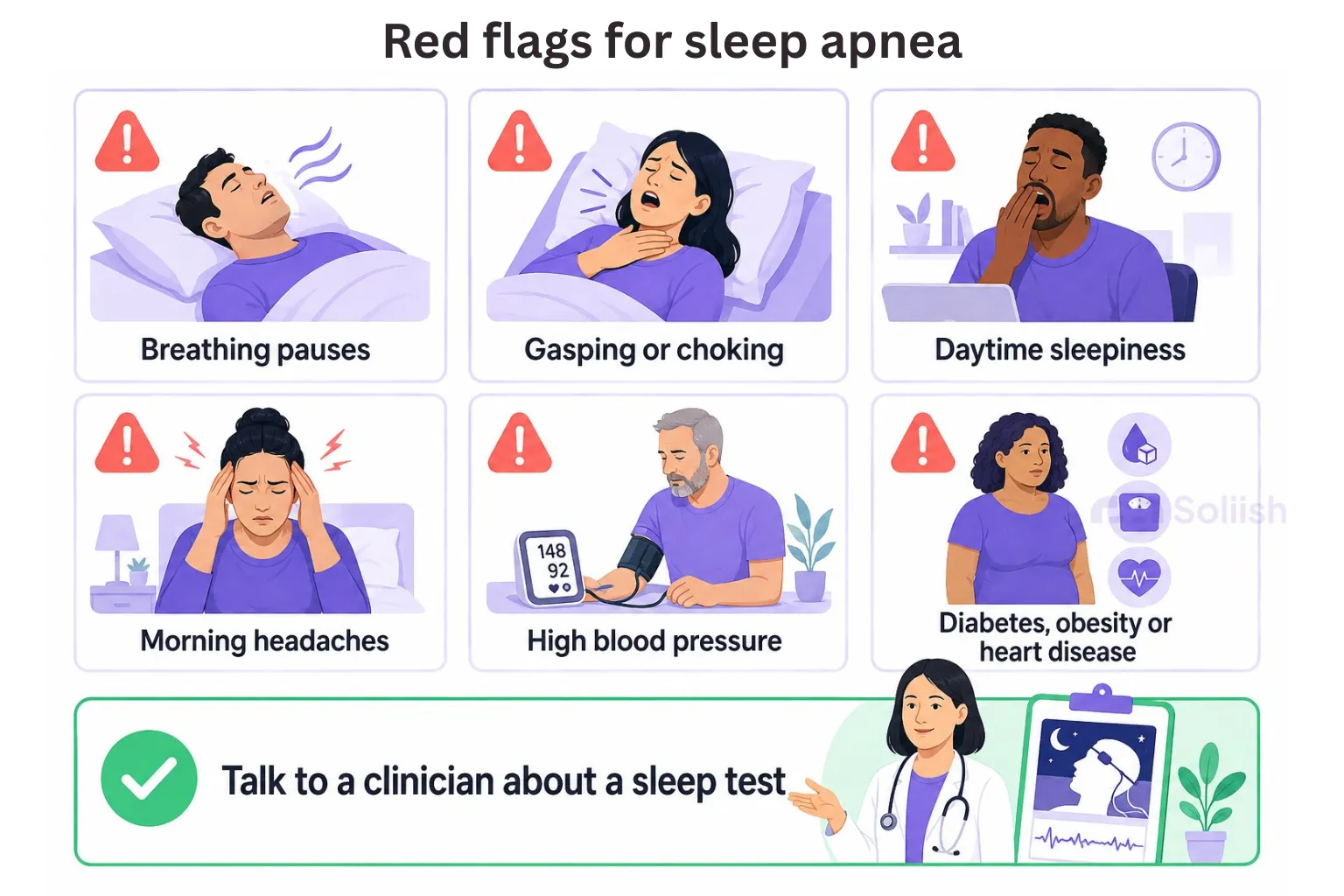
If any of these apply, it’s best not to guess, screening and testing can confirm whether it’s sleep apnea and guide the right treatment.
If your snoring is loud, interrupted by pauses, or leaves you tired and foggy, the smart next step is screening for OSA, not guesswork. Soliish makes that easy: camera-based screening (FaceX) plus a short intake that blends facial markers and symptom questions to generate an evidence-backed risk signal.
Based on screening results, Soliish helps guide individuals to next steps, including a telehealth visit with a board-certified sleep physician, a home sleep test, and, when indicated, referral into dental or DME therapy pathways; all without the friction of traditional sleep care.
Choose Soliish and we’ll help you move from suspicion to care - fast and simple.