
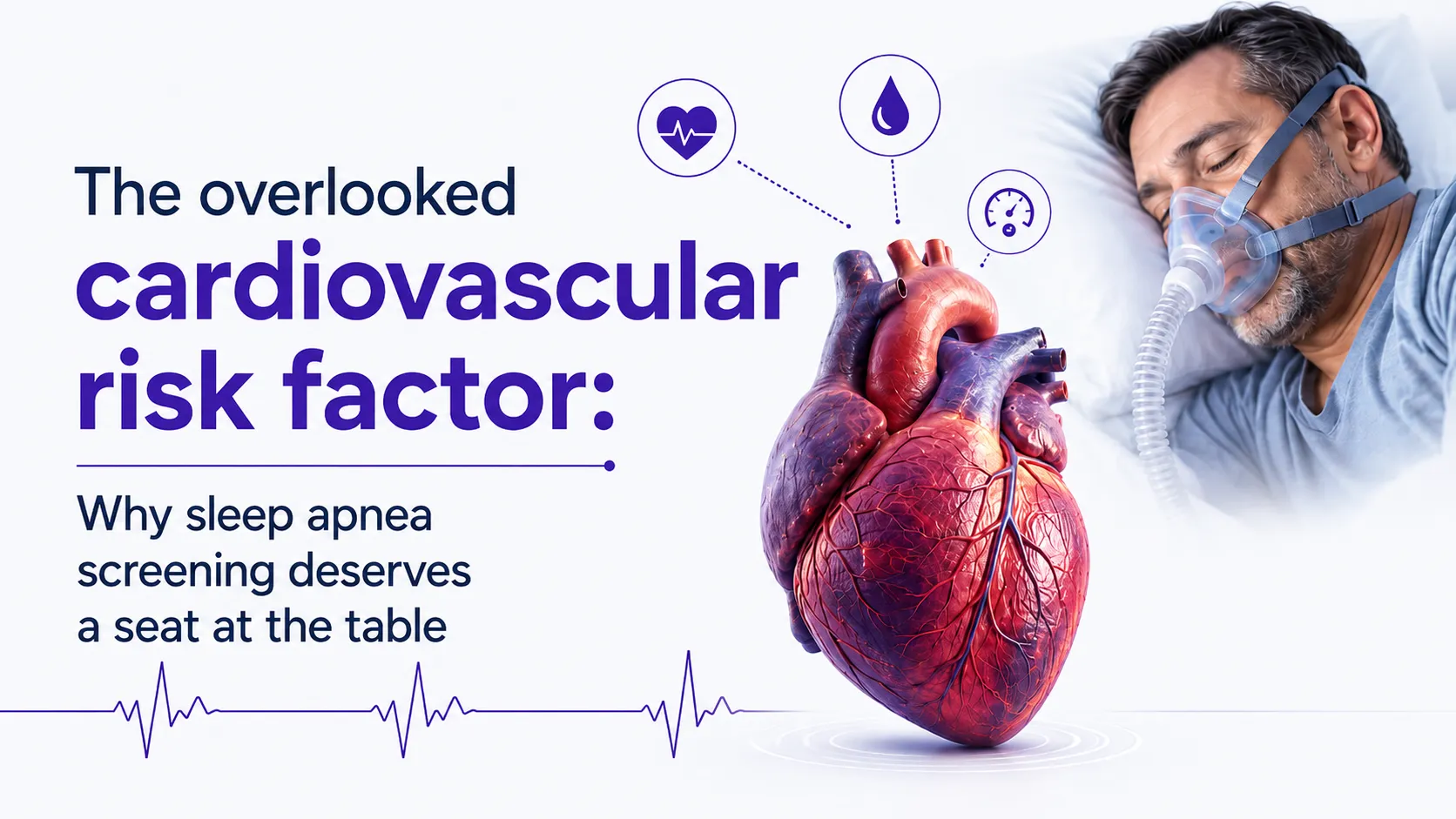
Obstructive Sleep Apnea (OSA) is no longer viewed merely as a sleep disorder; it is now recognized as a significant contributor to cardiovascular disease (CVD).
Obstructive Sleep Apnea (OSA) is no longer viewed merely as a sleep disorder; it is now recognized as a significant contributor to cardiovascular disease (CVD). Research increasingly highlights how OSA exacerbates cardiovascular risk, making early identification and management vital for clinicians seeking to improve patient outcomes.
OSA is characterized by recurrent episodes of partial or complete upper airway obstruction during sleep, leading to intermittent hypoxia and fragmented sleep. These events activate the sympathetic nervous system, elevate blood pressure, and trigger inflammatory pathways, which collectively contribute to hypertension, coronary artery disease, heart failure, and stroke [1,2].
Several validated tools aid in the early detection of OSA in individuals with cardiovascular conditions:
Biomarkers Linking OSA and Cardiovascular Risk
Emerging research identifies several biomarkers that may help clinicians assess the cardiovascular impact of OSA:
Beyond AHI: Phenotyping OSA for Cardiovascular Risk
Traditional reliance on the Apnea-Hypopnea Index (AHI)—the count of breathing interruptions per hour—has limitations in predicting cardiovascular outcomes [9]. Newer metrics such as hypoxic burden (cumulative oxygen desaturation) and traits like loop gain (ventilatory control stability) and arousal thresholds offer a more personalized approach to risk assessment [10].
Clinical Implications and Recommendations
Given the strong association between OSA and cardiovascular disease, clinicians should consider routine OSA screening in patients with resistant hypertension, atrial fibrillation, or unexplained heart failure [11].Early diagnosis and interventions such as continuous positive airway pressure(CPAP) therapy have demonstrated benefits in reducing cardiovascular morbidity and improving quality of life [12].
By integrating validated screening tools, biomarker analysis, and precision phenotyping, healthcare providers can more effectively identify high-risk individuals and tailor management strategies to reduce the substantial burden of OSA-related cardiovascular disease.
References