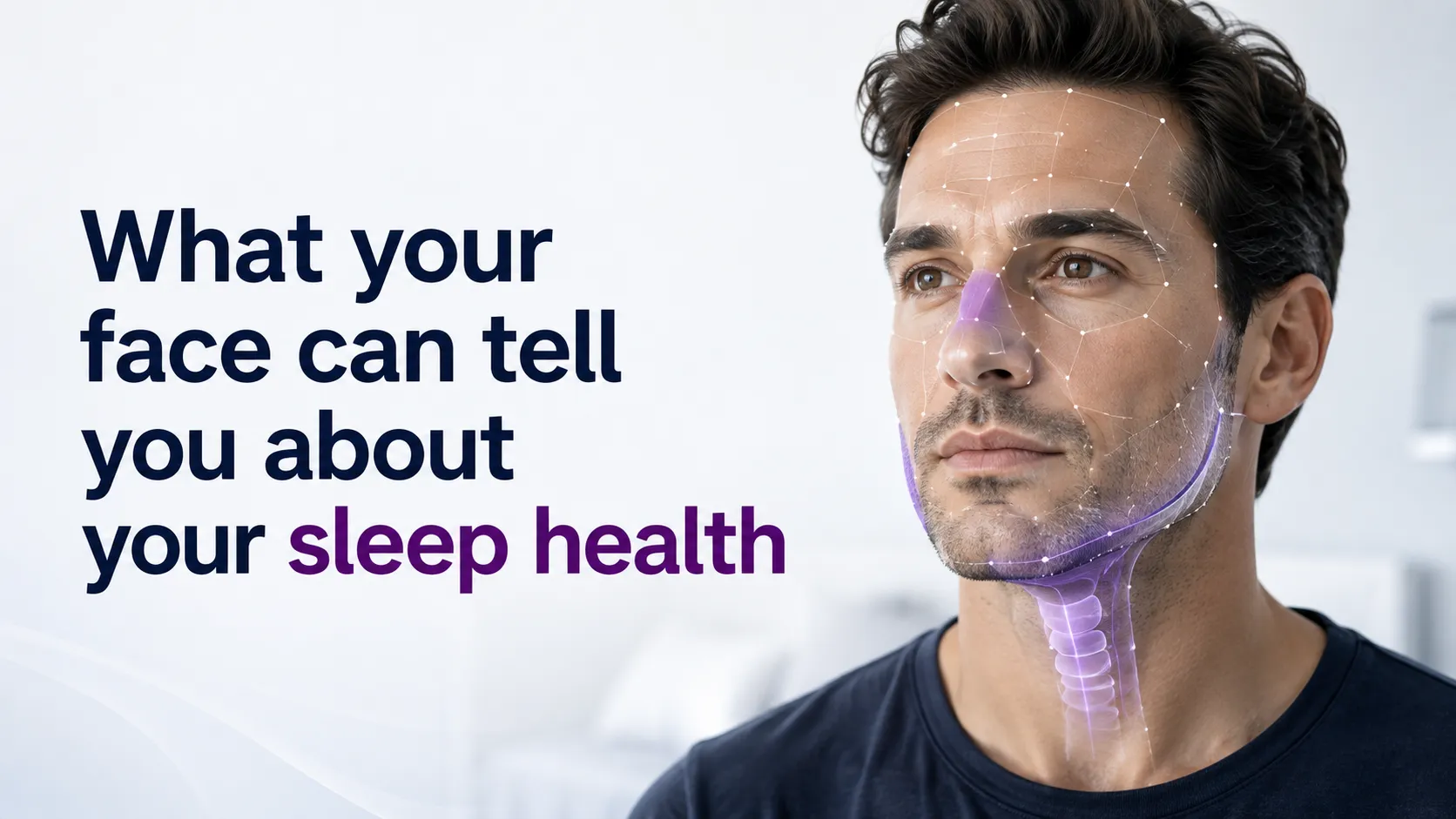
Your face carries real information about your sleep. Here is what dark circles, skin quality, and facial features can reveal about your sleep health.
You can usually tell when someone has not slept well. There is a look, hard to name but easy to recognize. Duller skin, puffier eyes, something in the face that says the night was not restorative.
That recognition is not just intuition. Research has documented that specific features of the face genuinely carry information about sleep quality, both in the short term and over years of chronic patterns.
Here is what the face actually shows, and how to read it as a signal worth paying attention to.
What does dark circles under your eyes actually mean?
Dark circles under the eyes are a visible sign that often correlates with sleep deprivation, though they are not caused by lack of sleep alone.
The skin under the eyes is thinner and has fewer oil glands than other areas of the face. When sleep is short or poor, several things happen at once: blood vessels beneath the delicate skin become more dilated, fluid retention around the eyes increases, and reduced blood flow gives the skin a duller appearance. All of this makes the darker tones underneath more visible.¹
A peer-reviewed study of 24 women aged 30 to 55 found that even two nights of sleep restriction significantly increased dark circles under the eyes when measured by photographic analysis, along with decreases in skin brightness and hydration.² Sleep deprivation affects how the face looks in ways that observers can consistently perceive.
Dark circles can also come from genetics, aging, allergies, or thinning skin over time. So they are a signal, not a proof. But when they show up alongside chronic tiredness, they usually point to a sleep pattern worth examining.
Poor sleep does accelerate visible skin aging, and the research is unusually consistent on this.
During deep sleep, the body enters repair mode. Collagen is produced, cellular turnover happens, and the skin barrier rebuilds itself. When sleep is chronically short or fragmented, these overnight repair processes are disrupted.
A study published in Clinical and Experimental Dermatology found that women with poor sleep quality showed significantly greater visible signs of skin aging, including fine lines, uneven pigmentation, and reduced skin elasticity, compared to good sleepers.³ Chronic sleep deprivation also elevates cortisol, which breaks down collagen and contributes to sagging over time.
This is why a face that has been chronically short on sleep often looks older than the person's actual age, and why "beauty sleep" turns out to be a real biological process rather than just a saying.
Certain facial features are associated with a higher likelihood of airway collapse during sleep, which is the mechanism behind obstructive sleep apnea and other sleep-disordered breathing.
The connection is anatomical. The mouth, throat, and airway are shaped by the bones and soft tissues of the face and skull. Certain visible features suggest an airway that may be more prone to narrowing during sleep:
Peer-reviewed research has confirmed that these craniofacial patterns are more common in adults with obstructive sleep apnea than in healthy controls.⁴ The connection between airway anatomy and sleep apnea risk explains the mechanism in more detail.
This is why sleep specialists and dentists trained in dental sleep medicine often examine facial anatomy as part of a sleep health evaluation. The face carries observable information about the airway underneath it.
Chronic mouth breathing, especially during childhood, can meaningfully change facial development.
When someone breathes through their nose, the tongue rests against the roof of the mouth. This gentle pressure helps shape the upper jaw during growth, encouraging a wide, well-formed palate. Chronic mouth breathing pulls the tongue away from the palate, which changes how the face develops over the years.
The result can include a narrower upper jaw, a longer face shape, dental crowding, an open-lip posture, and a slightly receded lower jaw. Research has confirmed these correlations in systematic reviews of the pediatric population.⁵
The facial features that develop from chronic mouth breathing tend to persist into adulthood and are worth understanding as a distinct pattern from short-term sleep deprivation signs.
Puffiness, dullness, and grayish undertones in the face are often signs of poor sleep quality on the shorter term rather than chronic patterns.
Puffiness usually comes from fluid retention that increases when sleep is disrupted. The lymphatic system that drains fluid works less effectively when sleep is short, and the face is one of the first places this shows.
Dull or gray-toned skin comes from reduced blood flow to the skin during sleep deprivation. When circulation drops, the natural glow of oxygenated blood in the skin fades, giving the face a washed-out or ashen appearance.
Both of these are usually reversible with restored sleep. Consistent short sleep, though, can make them chronic.
If your face shows multiple signs (dark circles, puffiness, dullness, plus signs of chronic mouth breathing or airway-related features), the pattern suggests something more than an occasional bad night.
A combination of signs often points to chronic sleep disruption rather than acute short sleep. That disruption could come from a range of causes: stress, life circumstances, or an underlying sleep condition like obstructive sleep apnea or upper airway resistance syndrome that has not yet been evaluated.
Chronic tiredness that does not lift, combined with visible signs of poor sleep on the face, is worth taking seriously. A self-check of common sleep apnea symptoms can help orient the next conversation with a healthcare professional.
The face carries genuine information about sleep health. Dark circles, puffiness, and skin dullness reflect recent sleep quality. Skin aging patterns reflect chronic sleep patterns. And certain facial features can suggest a higher likelihood of airway-related sleep issues that may have been going on for years.
Reading the face is not diagnostic. What the face shows is a signal, not a verdict. But it is a signal worth listening to, especially when the same patterns keep appearing week after week.
Soliish's AI selfie experience for sleep wellness helps you learn about factors related to your sleep, including how facial characteristics connect to airway function, and think through what to discuss with a qualified healthcare professional.