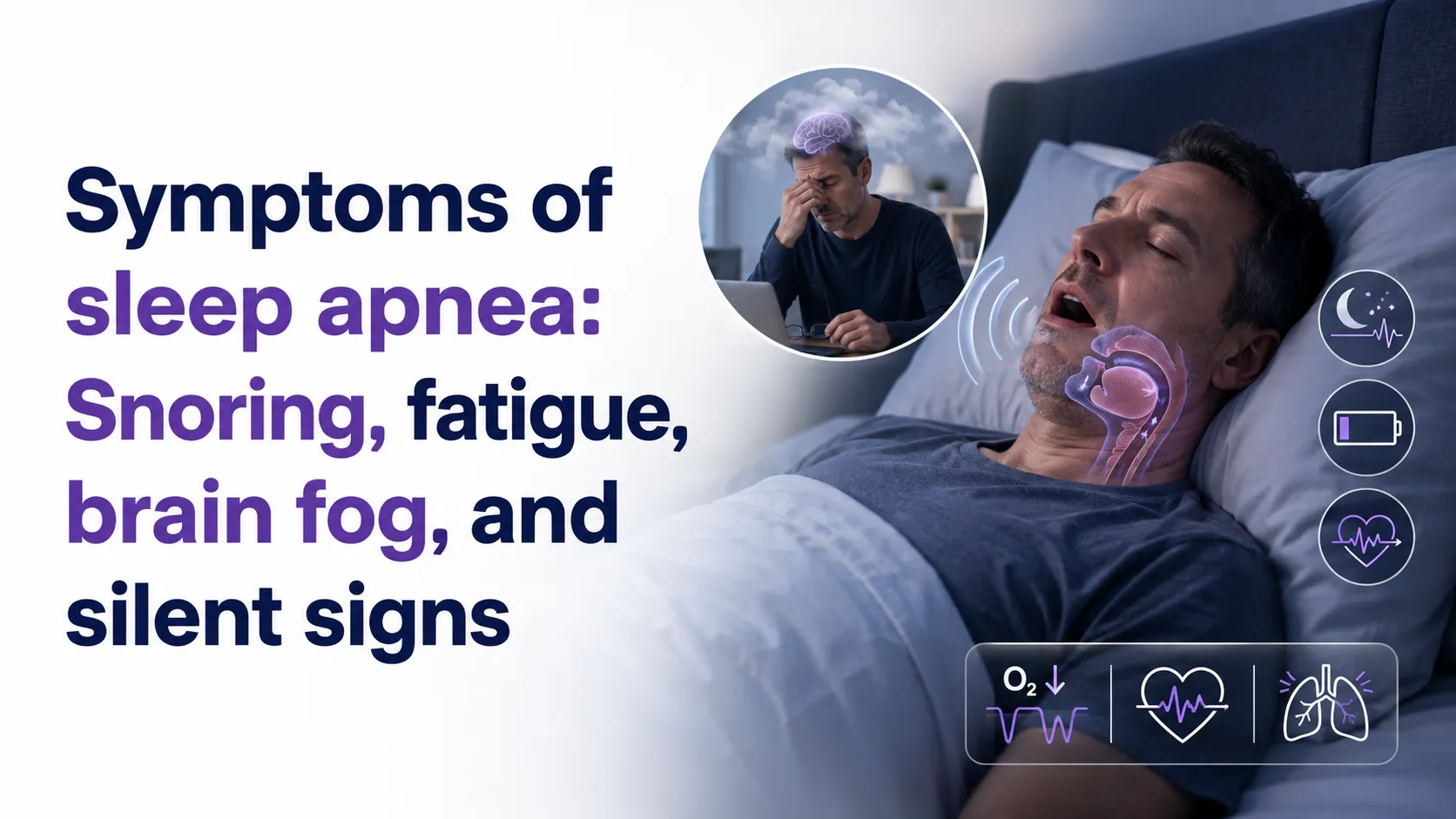
A simple self-check guide for the most common sleep apnea symptoms, what they mean together, and what to do if several of them sound like you.
Sleep apnea can be easy to miss.
The signs often feel like everyday stress, poor sleep, aging, or a busy schedule. Many people do not realize that loud snoring, morning headaches, daytime fatigue, and brain fog may be connected.
This guide walks through common sleep apnea symptoms in a simple way. It is not a diagnosis. Instead, it can help you notice patterns and decide whether it may be time to talk with a healthcare provider.
What are the most common sleep apnea symptoms?
Sleep apnea symptoms often show up in more than one part of your day.
You may notice issues at night. You may wake up feeling unrefreshed. You may feel tired, foggy, or irritable during the day. A partner may also notice signs you never see yourself.
Short answer:
The most common signs of possible sleep apnea include loud snoring, pauses in breathing during sleep, morning headaches, dry mouth, daytime sleepiness, poor focus, and waking up tired after a full night in bed.
One symptom on its own may not mean much.
A pattern is more important.
If you recognize several symptoms across different parts of your day, it may be worth taking the next step.
Nighttime symptoms can be hard to notice because they happen while you are asleep.
That is why a partner or family member often spots them first.
Common nighttime signs include:
Not everyone who snores has sleep apnea.
But loud snoring combined with gasping, restless sleep, or breathing pauses is worth paying attention to.
Morning symptoms are easy to dismiss.
Many people blame stress, dehydration, a late night, or just “not being a morning person.”
But waking up tired again and again is not something to ignore.
Common morning symptoms include:
If you regularly wake up tired after seven or eight hours in bed, your sleep may not be as restorative as it should be.
That does not automatically mean sleep apnea. But it is a useful clue.
Daytime symptoms are often the reason people finally look for answers.
Poor sleep can affect focus, mood, energy, and safety. Over time, it can make normal tasks feel harder than they should.
Common daytime signs include:
One sign deserves special attention.
If you ever feel like you may nod off while driving, take it seriously. That is a safety concern. It is worth discussing with a medical professional as soon as possible.
Many people do not know what happens while they sleep.
A partner may notice the pattern before they do.
Common partner-observed signs include:
If someone close to you has mentioned these signs, do not brush them off.
Their observations may help you have a more useful conversation with your doctor.
Sleep apnea can appear alongside other health concerns.
That does not mean one always causes the other. But certain conditions are commonly seen in people who may also have sleep-disordered breathing.
These include:
If you have one of these conditions and also notice sleep symptoms, it may be worth asking your doctor whether a sleep evaluation makes sense.
There is no perfect number.
A helpful rule is this: if you notice three or more symptoms across two or more categories, consider bringing it up with a healthcare provider.
For example:
You snore loudly.
You wake up with a dry mouth.
You feel tired during the day.
Your partner says you sometimes gasp at night.
That pattern is more meaningful than one tired afternoon.
You should also act sooner if someone has noticed pauses in your breathing, or if you feel sleepy while driving.
Start by writing down what you notice.
Include symptoms, how often they happen, and anything your partner has observed. Bring that list to your primary care doctor, dentist, or a sleep-health provider.
Sleep apnea is diagnosed through a sleep study. In many cases, that study can be done at home.
If you are not ready for a clinical conversation yet, you may want a private first step.
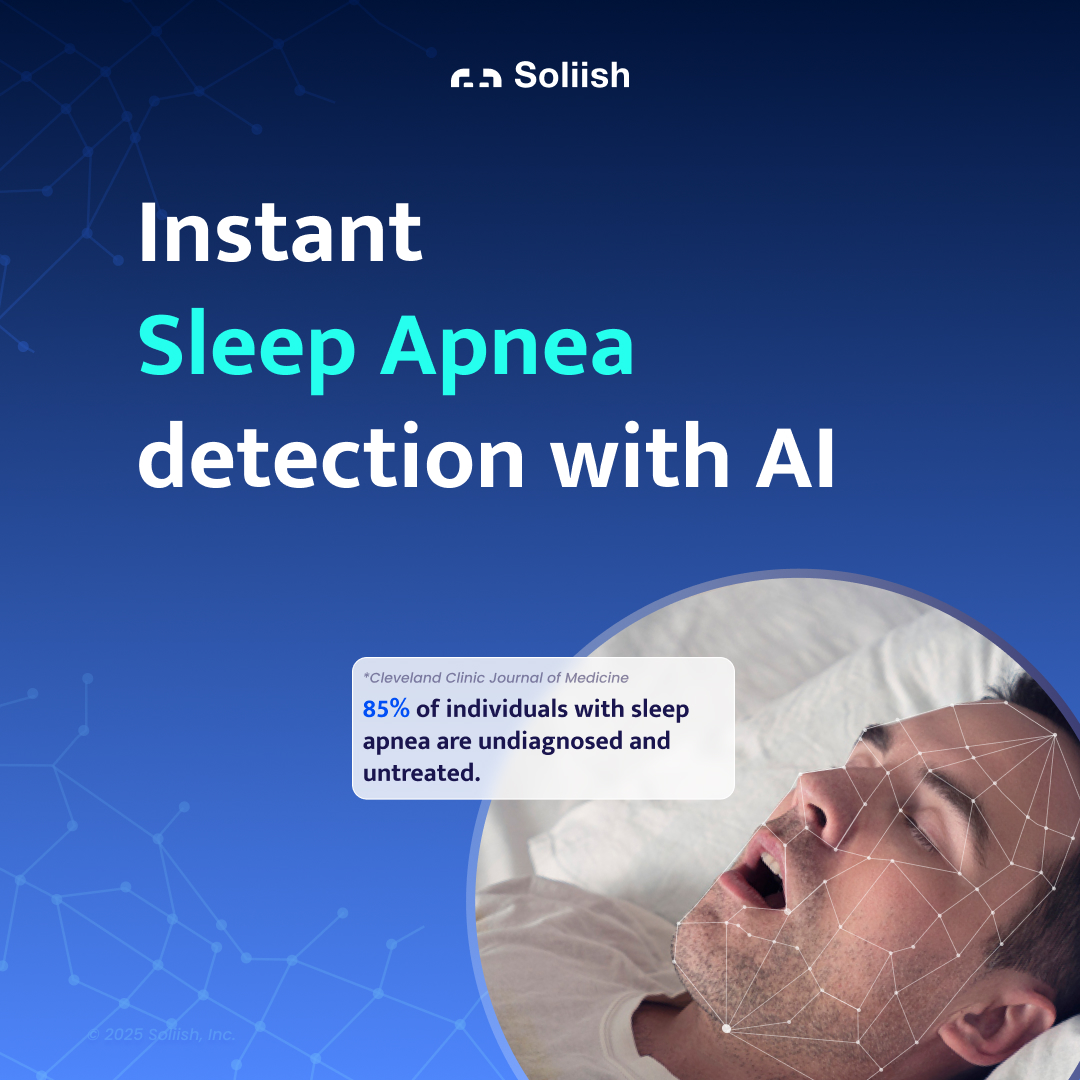
Soliish offers a facial-analysis-driven engagement tool that helps identify facial traits associated with elevated sleep apnea risk. It is designed to support sleep-health conversations and help guide appropriate evaluation pathways.
It does not diagnose sleep apnea.
It does not replace a sleep study.
It does not replace a physician or licensed sleep provider.
Instead, it can help you connect what you are feeling with visual, anatomy-based risk insights that may be worth discussing with a healthcare professional.
Facial analysis may help identify facial traits associated with elevated sleep apnea risk. When combined with symptom awareness, it can support patient education and help guide the next conversation with a qualified provider.
Sleep apnea risk is not only about weight or snoring.
Craniofacial structure, jaw position, airway-related anatomy, and other visible traits may play a role in sleep-health risk patterns. This is one reason facial analysis can make the topic easier to understand.
For many people, seeing a visual risk signal can make the next step feel clearer.
Consider talking to a healthcare provider if:
You do not need to wait until symptoms feel severe.
Earlier conversations can help you understand what is going on and what options may be appropriate.
Sleep apnea symptoms can be subtle.
They often show up as a pattern, not a single obvious sign. Loud snoring, morning headaches, dry mouth, daytime fatigue, brain fog, and partner-observed breathing pauses are all worth noticing.
A self-check is not a diagnosis.
But it can help you decide whether the pattern is strong enough to discuss with a healthcare provider.
Soliish supports that first step by helping people better understand facial traits associated with elevated sleep apnea risk and by supporting sleep-health education, engagement, and appropriate next-step conversations.
If several symptoms in this guide sound familiar, it may be time to take your sleep health seriously.


Yes. Many people do not realize they may have sleep apnea because the most obvious signs happen during sleep. A partner may notice snoring, gasping, or breathing pauses before the person recognizes a problem.
No. Not everyone who snores has sleep apnea. But loud snoring combined with daytime fatigue, morning headaches, dry mouth, or breathing pauses may be worth discussing with a doctor.
Waking up tired after enough time in bed may mean your sleep is being interrupted. Sleep apnea is one possible reason, but it is not the only one. A healthcare provider can help evaluate the cause.
Morning headaches can be one symptom seen in people with possible sleep-disordered breathing. They are not specific to sleep apnea, but they may matter when they appear with snoring, dry mouth, or daytime fatigue.
No. Facial analysis does not diagnose sleep apnea. Soliish helps identify facial traits associated with elevated sleep apnea risk and supports sleep-health conversations. A sleep study and clinical evaluation are needed for diagnosis.
Write down your symptoms and talk to a healthcare provider. They may recommend a sleep evaluation or sleep study. You can also use a private risk-awareness tool, like Soliish, to support the conversation before seeking formal evaluation.