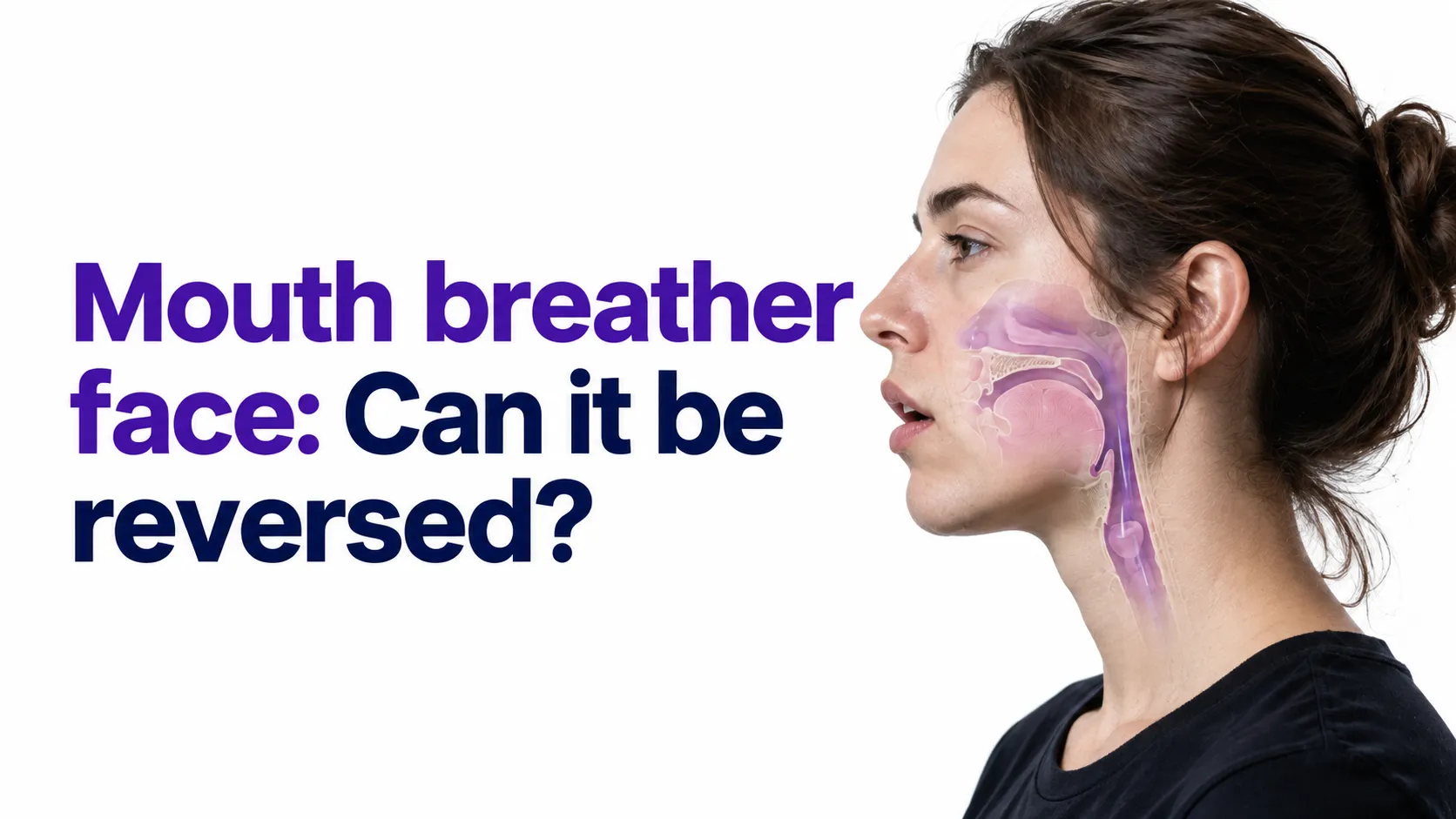
Chronic mouth breathing can change the shape of the face over time. Here is what happens, why it happens, and what to do about it.
"Mouth breather face" is one of those terms that lives in two worlds. It shows up in orthodontic and sleep medicine literature as a genuine clinical pattern, and it circulates online as a casual insult about how someone looks.
The clinical version is real, and it is worth understanding honestly. Chronic mouth breathing, especially during childhood, has been linked in peer-reviewed research to specific and measurable changes in facial development.
Here is what the evidence actually shows, what causes it, and what can be done.
What is mouth breather face?
Mouth breather face is a clinical pattern of facial features that can develop when someone breathes chronically through their mouth rather than their nose, especially during childhood when the face is still growing.
The observable features clinicians describe include:
Not everyone with mouth breathing develops all these features. The extent depends on how early the mouth breathing started, how long it lasted, and the individual's underlying anatomy.
In the older clinical literature, this pattern was sometimes called "adenoid facies" or "long face syndrome," reflecting the observation that many affected patients had enlarged adenoids as children.¹
The mechanism is essentially about tongue position and airflow pressure during growth.
When someone breathes normally through the nose, the tongue rests against the roof of the mouth. This constant, gentle pressure helps shape the upper jaw as it develops, encouraging a wide, well-formed palate.
When someone breathes chronically through the mouth, the tongue drops away from the palate to allow airflow. Without that tongue pressure from below, the upper jaw does not develop as widely. The face compensates by growing more vertically instead of horizontally.²
At the same time, the constant open-mouth posture affects head position, facial muscle tone, and the growth pattern of the lower jaw. A 2005 study found that mouth-breathing children had significantly higher mandibular inclination and more vertical facial growth than nasal-breathing children of the same age.²
A 2021 systematic review and meta-analysis in BMC Oral Health confirmed that mouth breathing is consistently associated with these skeletal changes, particularly maxillary narrowing and increased vertical growth patterns.³ A 2026 systematic narrative review reached similar conclusions, adding higher rates of malocclusion, open bite, and dental crossbite among chronic mouth breathers.⁴
Mouth breathing is usually a symptom, not a habit. Most people who breathe through their mouth do so because nasal breathing is difficult or blocked.
The most common causes include:
In children, enlarged adenoids are one of the most common culprits, which is why the older clinical name "adenoid facies" tied the two together directly.
Chronic mouth breathing is not just an aesthetic issue. It is strongly associated with sleep-disordered breathing, and the same facial features that develop from mouth breathing (narrow upper jaw, recessed lower jaw, high-arched palate) are also risk factors for obstructive sleep apnea later in life.
This connection matters both ways. Sleep apnea often causes mouth breathing during sleep, which reinforces the pattern. And the facial changes from chronic mouth breathing narrow the upper airway further, making sleep apnea more likely as the person grows.
For anyone who has been told they have "mouth breather face," this is worth taking seriously. The signs that show up in facial features can point to airway issues that go deeper than appearance.
Mouth breathing and obstructive sleep apnea are related, but they are not the same. An adult can breathe through the mouth without having sleep apnea, and someone with sleep apnea may not notice obvious mouth breathing.
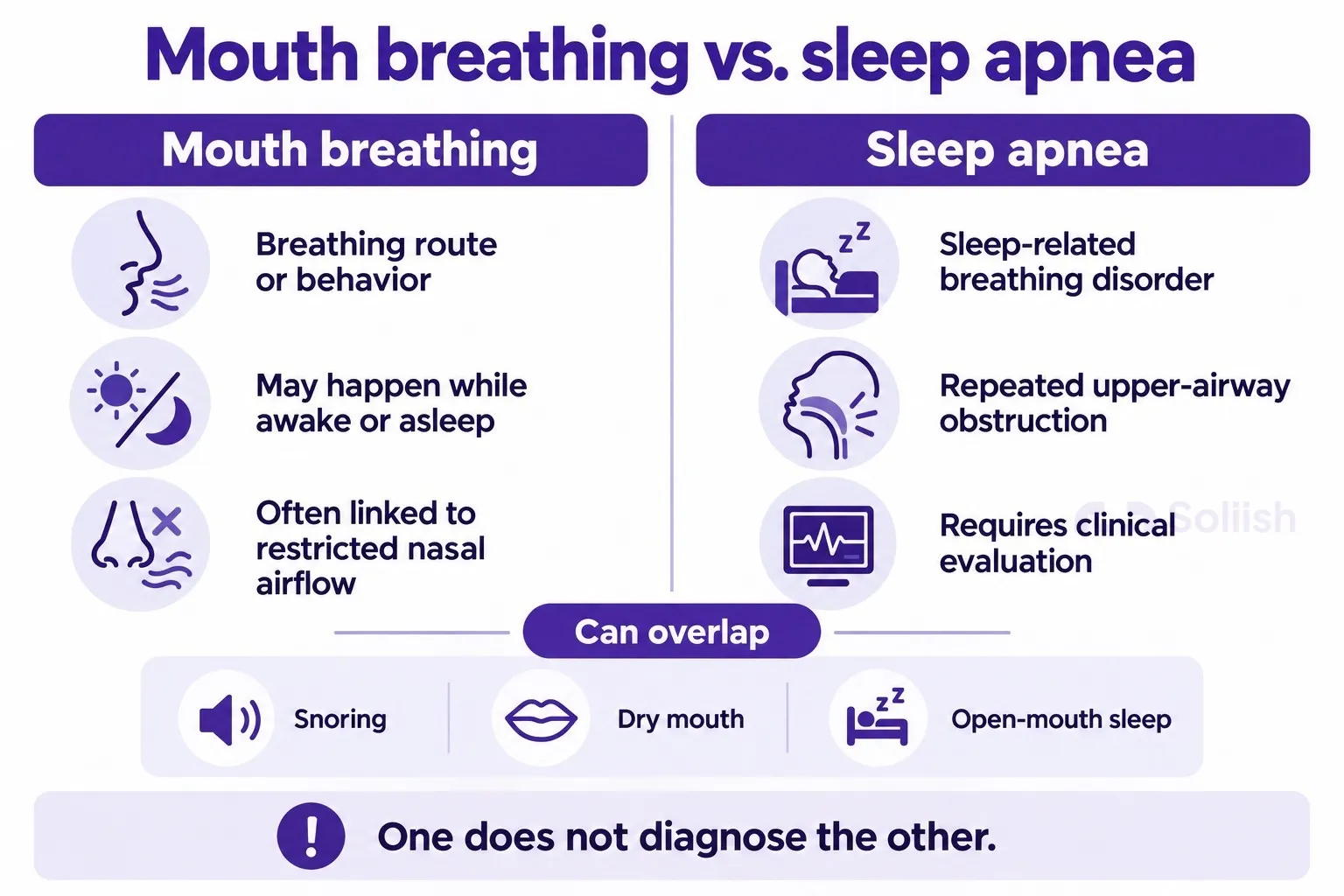
During sleep, nasal obstruction may encourage a switch toward oral breathing. Expert consensus and physiological research indicate that mouth opening can increase upper-airway collapsibility and that nasal obstruction can make positive airway pressure therapy harder to tolerate in some adults.6
Signs worth discussing with a healthcare professional include:
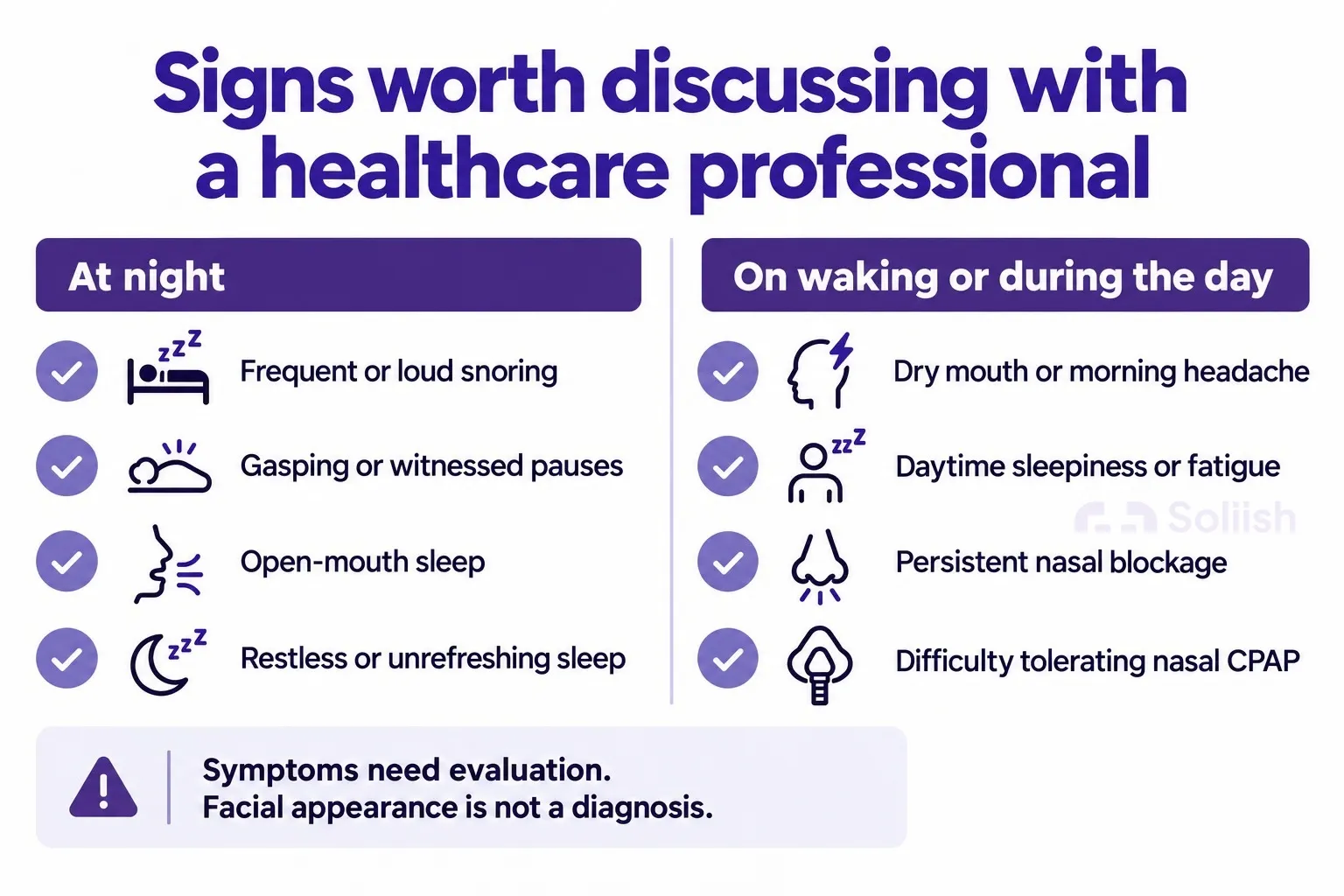
These symptoms do not confirm sleep apnea. A clinical evaluation and, when indicated, a sleep study are more reliable than facial appearance or an online image assessment.
When mouth breathing is driven by a treatable problem, addressing that problem may improve how comfortably an adult breathes through the nose. Depending on the cause, people may also notice less morning dry mouth, better oral comfort, fewer nasal symptoms, or better tolerance of positive airway pressure therapy.
Resting lip or tongue posture may change with appropriate care, particularly when an airway problem is treated and a qualified clinician identifies a functional component. These changes should not be marketed as guaranteed facial remodeling.
A 2026 systematic review found possible associations between adult mouth breathing and forward head posture, temporomandibular joint dysfunction, altered chewing-muscle activity, and reduced chewing efficiency. The authors rated the certainty of the evidence as very low and advised caution when interpreting the findings.7
An adult's established facial bones are unlikely to change substantially because of breathing exercises alone. Research does not show that facial appearance can reliably identify adult mouth breathing or that switching breathing mode will reverse an established jaw shape.
Dental crowding, overjet, bite problems, or a recessed jaw may be treatable, but the appropriate options depend on the individual's anatomy and goals. Treatment could involve dentistry, orthodontics, an oral appliance, or surgical evaluation. Better nasal breathing and a different facial structure are separate outcomes; one should not be promised as proof of the other.
Some adult orthodontic and surgical interventions can address specific skeletal issues, but these are more invasive and require careful evaluation.
.webp)
If you find yourself mouth breathing, a few sensible next steps to follow are as follows.
Also, a self-check of common sleep apnea symptoms can help orient the conversation with a healthcare professional.
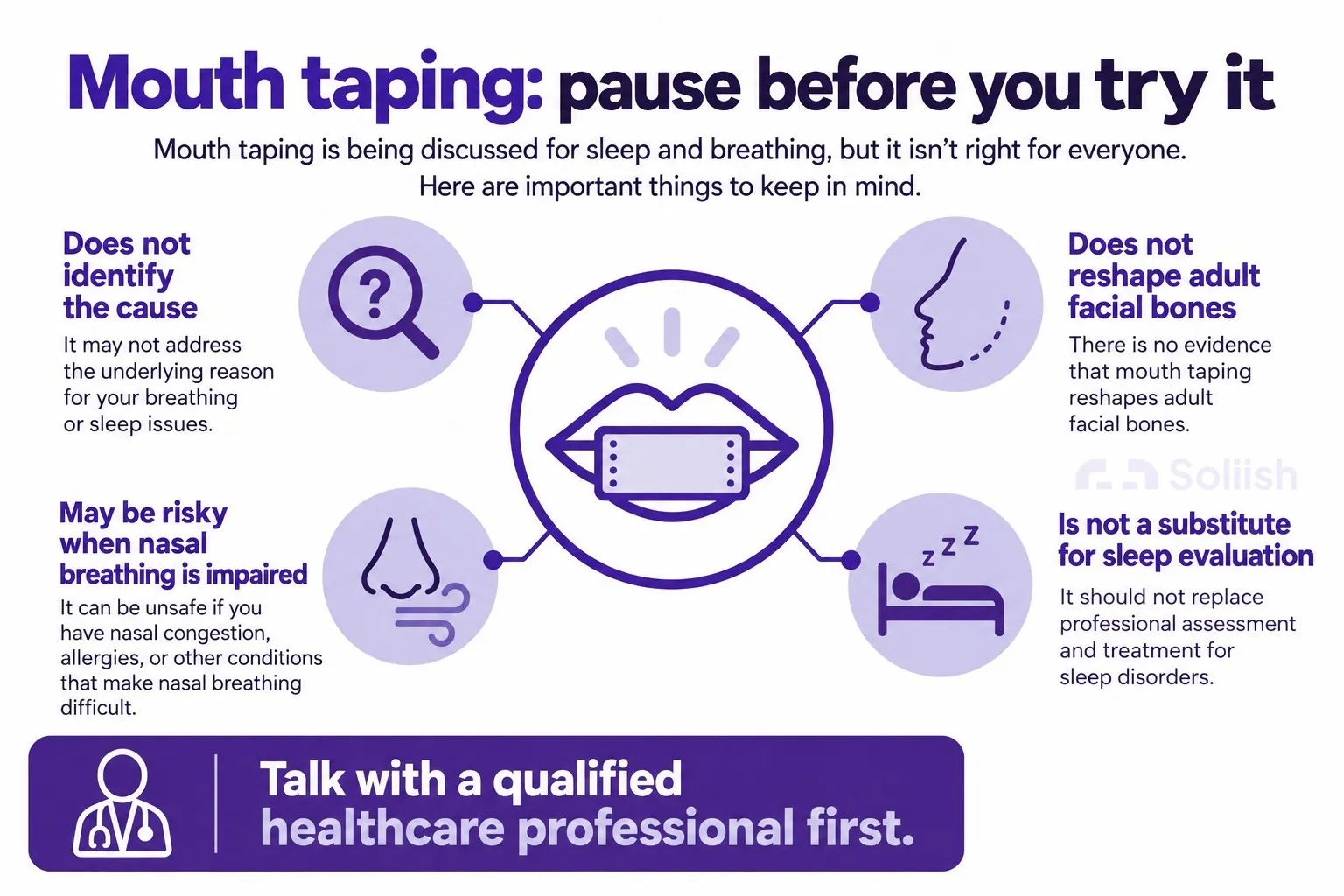
Mouth taping is often promoted online as a quick way to force nasal breathing or change facial appearance. It does not identify why an adult is breathing through the mouth, and it does not reshape established facial bones.
A 2025 systematic review found limited evidence of benefit, noted that many studies excluded people with nasal obstruction, and identified potential risks when oral airflow is restricted despite impaired nasal breathing. Forced mouth closure is not universally beneficial.5
Do not use tape to force the mouth closed when nasal breathing is difficult, when sleep apnea is suspected, or as a substitute for medical evaluation. Discuss persistent mouth breathing with a qualified healthcare professional before trying an intervention that restricts oral airflow.
Mouth breather face is a real clinical pattern, not just an internet insult. The research linking chronic mouth breathing to specific craniofacial changes is well-established, particularly in children.
The important reframe is that these features are not a personality flaw or an aesthetic failure. They are the physical result of years of breathing a certain way, usually because nasal breathing was blocked by something addressable.
Understanding the cause is the first step. Addressing it, whether through ENT care, dental intervention, or evaluation for sleep-disordered breathing, opens the door to real change.
The Soliish FaceX sleep wellness experience helps you learn about factors related to your sleep and think through what to discuss with a qualified healthcare professional.