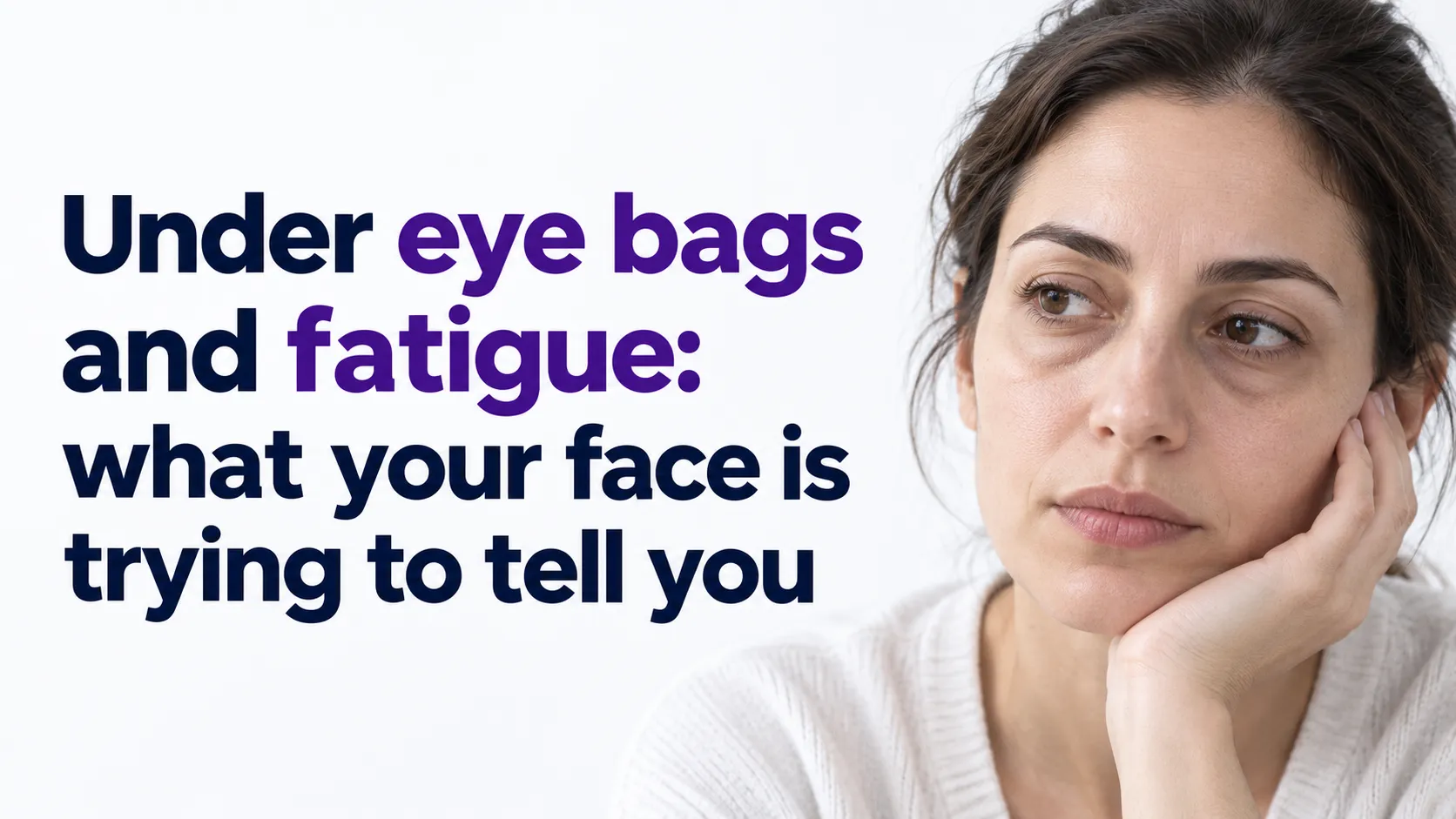
Chronic under eye bags and persistent fatigue can point to more than lack of sleep. Here is what the research says and when it is worth taking seriously.
You slept a full night. Maybe two full nights in a row. And your face still looks tired.
The bags under your eyes are still there. Your skin still has that dull, ashen quality. And a colleague or family member has probably said "you look tired" one too many times, even though you feel you should not.
If that sounds familiar, you are not imagining it. Your face carries information about your sleep that does not always match how many hours you spent in bed. Here is what the research shows about what those signs actually mean.
What causes under eye bags?
Under eye bags are caused by fluid retention and thinning skin around the eyes, made more visible by dilated blood vessels beneath.
The skin under the eyes is the thinnest on the entire body. When the body retains fluid overnight, this area is one of the first places it shows. When blood vessels beneath the skin dilate, whether from tiredness, allergies, or other causes, the dark tones underneath become more visible.
A peer-reviewed study of 24 women aged 30 to 55 found that even two consecutive nights of restricted sleep significantly reduced skin hydration, increased water loss from the skin, and made the facial signs of tiredness visibly worse.¹ The effect was measurable using scientific instruments, and observers could consistently perceive the difference.
Under eye bags are a real signal. The question is what they are signaling.
Under eye bags are linked to fatigue because both share a common driver, which is often poor sleep quality rather than just short sleep duration.
Fatigue is not the same as tiredness. Tiredness is a temporary state that resolves with rest. Fatigue is a persistent feeling of low energy that does not lift even after a full night of sleep. When under eye bags appear alongside fatigue, they are often telling the same story: something is disrupting the restorative function of sleep.
A study published in Royal Society Open Science found that people who had gotten insufficient sleep were perceived by observers as less attractive, less healthy, and more sleepy.² The face communicates fatigue in ways that are visible to others before we may even realize it ourselves.
The connection matters because it reframes what the under eye bags might mean. They are not just a cosmetic issue that goes away with a good night of sleep. If they persist alongside chronic tiredness, they are pointing to something worth investigating.
If under eye bags persist even after adequate sleep, the sleep you are getting may not be as restorative as it feels.
Sleep quality matters as much as sleep duration. Someone who spends 8 hours in bed but has fragmented sleep, or sleep-disordered breathing, or frequent brief awakenings they do not remember, is not getting the same restorative benefit as someone who sleeps deeply for the same amount of time.
Sleep-disordered breathing conditions, including obstructive sleep apnea and upper airway resistance syndrome, are common causes of unrefreshing sleep. People with these conditions often report feeling tired despite adequate hours in bed. And the visible signs on the face, including persistent under eye bags, chronic dullness, and general tired-looking features, can be part of the picture.³
If the bags do not respond to more sleep, the sleep itself may be the issue.
Chronic fatigue combined with persistent under eye bags is worth investigating when the pattern has lasted more than a few weeks and does not respond to lifestyle changes.
The signs that turn this from a cosmetic concern into a health question include:
If any of these show up alongside the persistent under eye bags, the combination points toward possible sleep-disordered breathing rather than simple sleep deprivation.
The right response depends on what is causing the pattern.
If the bags come and go with sleep quality, focus on improving sleep hygiene.
Consistent bedtime and wake time
A dark, cool bedroom
Limited screen time before bed
Reduced alcohol and caffeine in the evening
These changes address the short-term contributors to the appearance of tiredness.
If the bags are persistent and combined with chronic fatigue, cosmetic products and skincare routines will not solve the underlying issue. The face is reflecting something the body is doing at night. Addressing it means investigating what that something is.
A conversation with a healthcare professional, particularly a sleep physician, is the useful next step. Sleep testing can determine whether sleep-disordered breathing is part of the picture. ENT specialists can evaluate whether nasal obstruction or other airway issues are contributing.
Research on sleep and skin has been unusually consistent on a few key points.
Sleep deprivation causes visible changes to the face, including under eye bags, dull skin, and features that observers reliably perceive as fatigued.¹ These changes happen quickly, sometimes after just two nights of restricted sleep.
Sleep quality affects skin health independently of sleep duration. Poor sleepers show significantly greater visible signs of skin aging and reduced skin barrier function compared to good sleepers.⁴
The bidirectional relationship between sleep and the skin means that both improving sleep and treating underlying sleep conditions can visibly change how the face looks over time. This is why chronic under eye bags in someone who thinks they are sleeping enough deserve a closer look at the quality of that sleep, not just the quantity.
Under eye bags are a real signal. And when they persist alongside chronic fatigue, they are often telling you that your sleep is not doing its job.
For occasional bags after a bad night or two, rest and hydration usually resolve them. For persistent bags combined with chronic fatigue, especially in someone who spends adequate hours in bed, the face is pointing to something worth investigating.
If your face has been trying to tell you something and you are ready to listen, connecting with the right healthcare professional is the practical next step. Soliish can help you explore that conversation.