Poor sleep does more than make you tired. Here is what it actually does to your weight, blood pressure, headaches, and overall health, in plain language.
Poor sleep does more than make you tired.
It can affect your energy, focus, mood, skin, weight, blood pressure, metabolism, and long-term health. Some effects show up the next morning. Others build slowly over months or years.
Sometimes poor sleep comes from habits, stress, or an uncomfortable sleep environment. Other times, it may be linked to an underlying health condition, such as insomnia, obstructive sleep apnea.
This guide explains what poor sleep can do to your body, when it may be time to look deeper, and how sleep-health conversations can help you find the right next step.
What causes poor sleep?
Poor sleep can be caused by lifestyle habits, sleep environment, stress, work schedules, or underlying health conditions that interrupt normal rest and recovery.
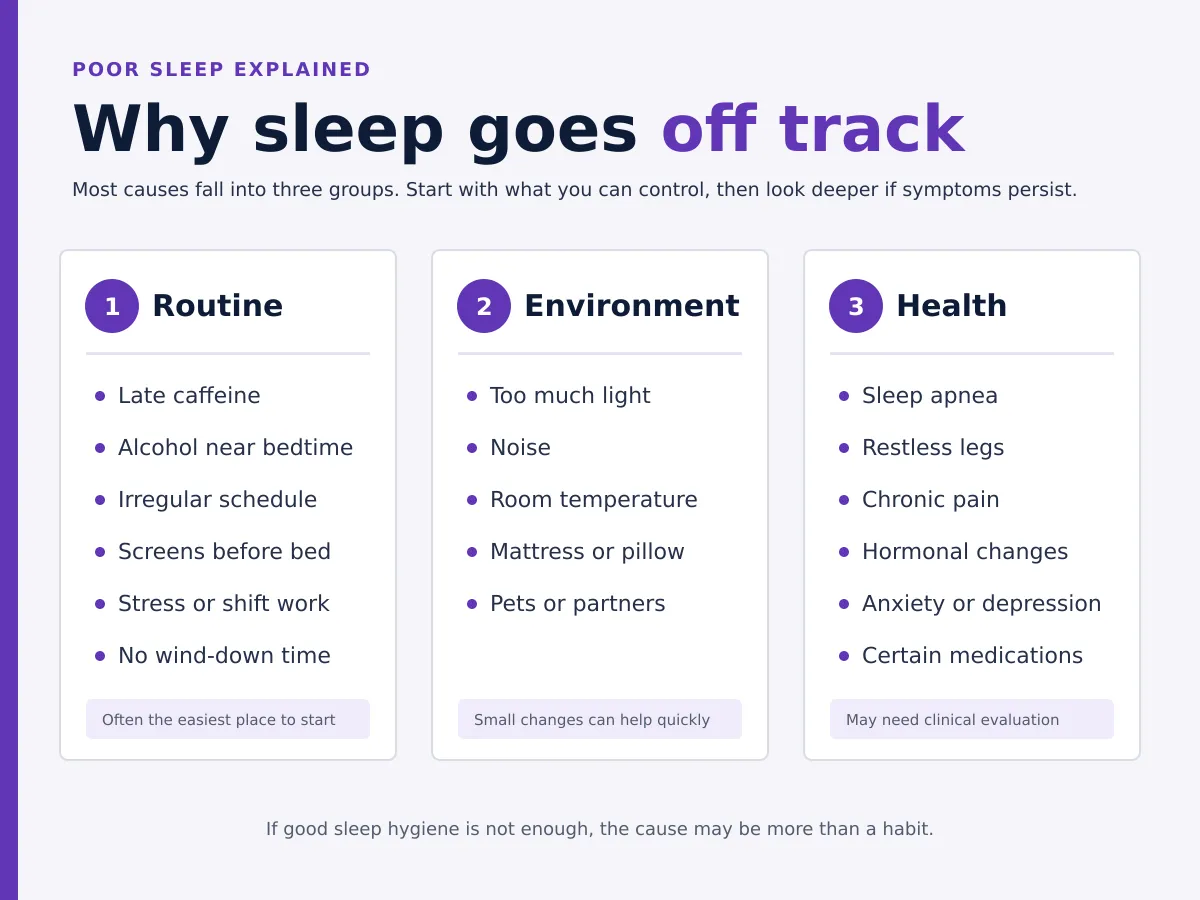
Common causes fall into three broad groups.
Lifestyle and routine
These include:
These issues are common. They are also often the easiest place to start.
Sleep environment
Your bedroom can also affect sleep quality.
Common issues include:
Small changes can help, especially when the problem is environmental.
Underlying health conditions
Sometimes poor sleep is not just about habits.
Health-related causes may include:
When an underlying health issue is involved, sleep hygiene alone may not fully solve the problem.
Poor sleep hygiene means the habits and conditions around sleep are making it harder for your body to rest well.
Good sleep hygiene usually includes:
Sleep hygiene matters because your body needs rhythm and consistency.
When that rhythm is disrupted, you may fall asleep later, wake up more often, or miss deeper stages of sleep. You may technically spend enough time in bed but still wake up feeling unrested.
That is why improving sleep hygiene is often the first step.
But it should not be the only step if symptoms continue.
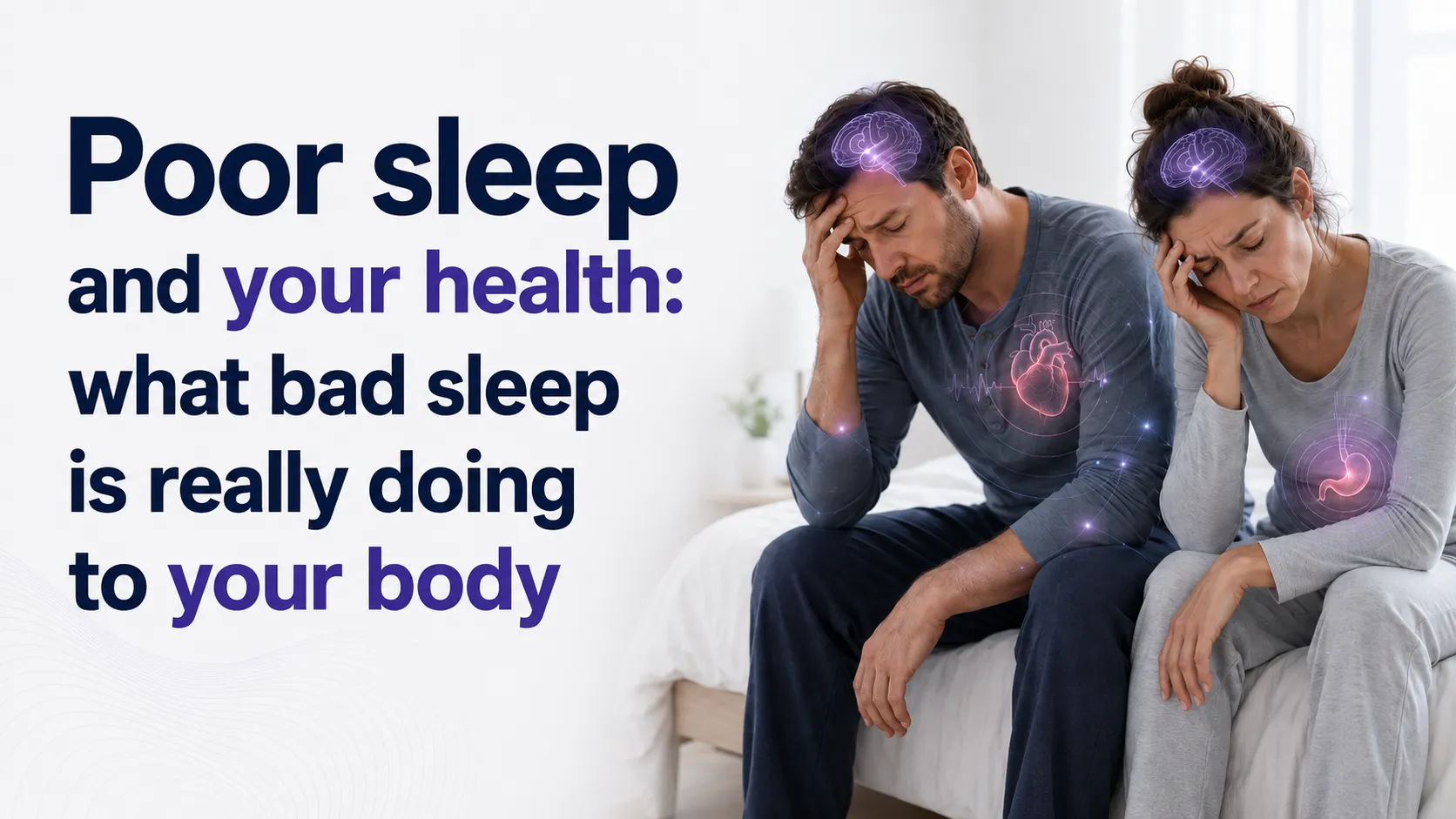
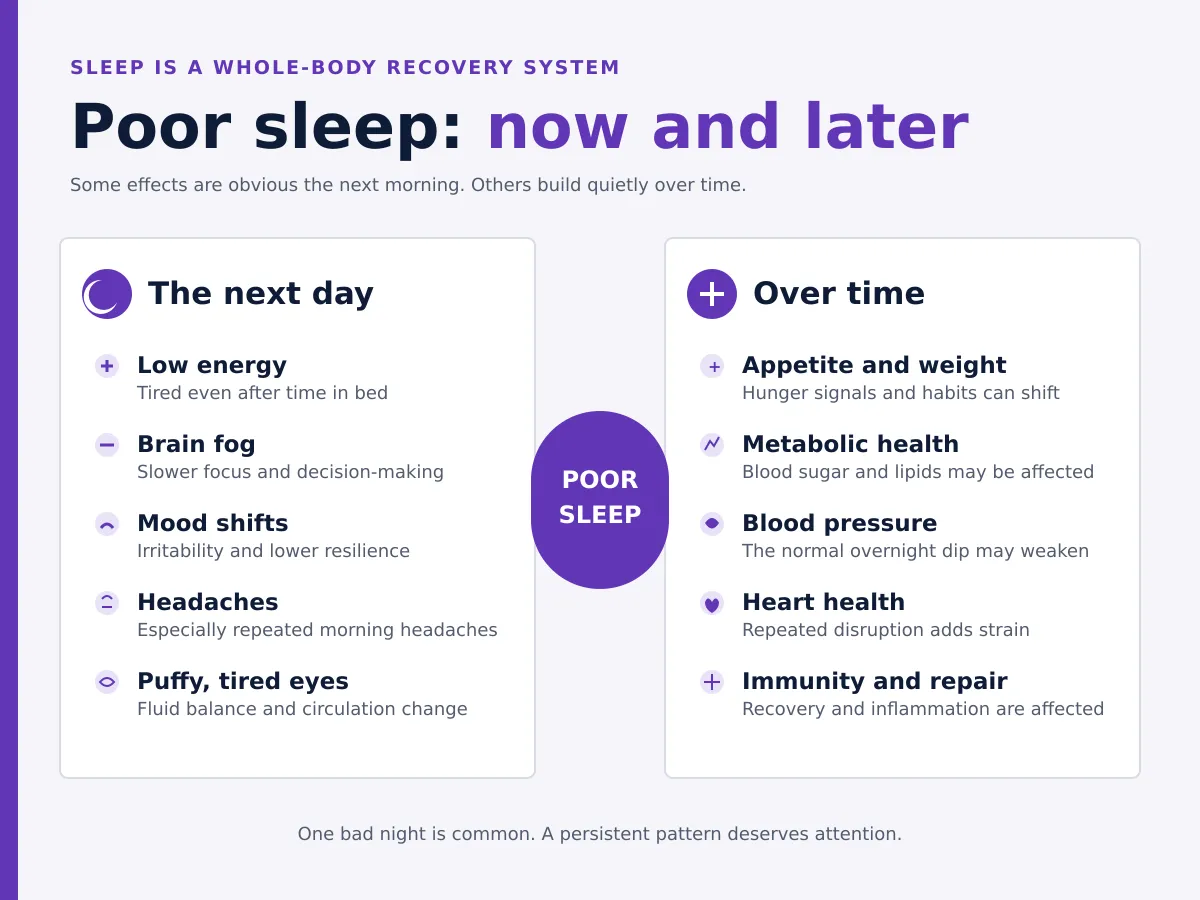
Poor sleep quality affects nearly every major system in the body.
It can influence:
Short-term effects are usually easier to notice. You feel tired. You have brain fog. You may get headaches or feel irritable.
Long-term effects are quieter. Blood pressure may rise. Weight may change. Cholesterol and blood sugar may become harder to manage.
That is why persistent poor sleep deserves attention.
It is not only about feeling tired. Sleep is one of the body’s primary recovery systems.
Yes. Poor sleep can contribute to headaches, including morning headaches.
When sleep is disrupted, the brain and body do not recover as well. Pain sensitivity may increase. Neck and shoulder tension may build. Stress hormones may stay elevated.
Morning headaches are especially worth noticing.
They can have many causes, but they may also appear when sleep quality is poor or breathing is disrupted overnight.
If you often wake up with headaches, especially if they fade later in the morning, it may be worth discussing sleep quality with a healthcare provider.
Look at the pattern.
A headache after one bad night may not mean much. Repeated morning headaches along with snoring, dry mouth, daytime fatigue, or brain fog may be more meaningful. Morning headaches are commonly reported by people later diagnosed with obstructive sleep apnea.
Poor sleep can make the under-eye area look darker, puffier, or more tired.
This happens because sleep affects fluid balance, circulation, and inflammation.
When you do not get enough restorative sleep, fluid may collect around the eyes. The skin in that area is thin, so puffiness shows quickly.
Poor sleep can also make small blood vessels under the eyes more visible. That can create a darker or bluish tone.
For many people, eye bags are one of the first visible signs that sleep quality is off.
They do not prove a sleep disorder. But if they appear with fatigue, morning headaches, or unrefreshing sleep, they may be part of a larger pattern.
Poor sleep can contribute to weight gain.
It affects both biology and behavior.
When sleep is short or fragmented, appetite hormones can shift. You may feel hungrier than usual. Cravings for high-calorie foods may increase. Your body may also have a harder time managing blood sugar. Sleep deprivation may also influence hunger-regulating hormones such as ghrelin and leptin.
Poor sleep can also make healthy routines harder.
When you are tired, you may move less, skip workouts, snack more, or rely on caffeine and convenience foods to get through the day.
Over time, these changes can add up.
Weight is complex. Sleep is only one part of the picture. But if weight gain appears alongside fatigue, poor sleep quality, snoring, or morning headaches, sleep health may be worth exploring.
Poor sleep can contribute to high blood pressure.
During healthy sleep, blood pressure typically dips overnight. This gives the cardiovascular system a period of rest.
When sleep is fragmented or disrupted, that normal dip may not happen as consistently. Over time, the heart and blood vessels may stay under more strain.
Obstructive sleep apnea is one sleep-related condition strongly associated with high blood pressure. Repeated breathing disruptions can trigger surges in adrenaline and sympathetic nervous system activity during the night.
If you have hard-to-control blood pressure and also wake up tired, snore, or have morning headaches, ask your doctor whether sleep apnea should be considered.
Yes. Poor sleep may affect cholesterol, blood sugar, and metabolic health.
The body uses sleep to regulate hormones, inflammation, and energy balance. When sleep quality stays poor, those systems can become less stable.
Poor sleep may contribute to:
These changes do not happen all at once.
They build gradually. That is why many people do not connect long-term metabolic changes with years of poor sleep.
Sleep is not separate from health. It is part of the system that helps regulate it.
Sleep apnea is one possible hidden cause of poor sleep.
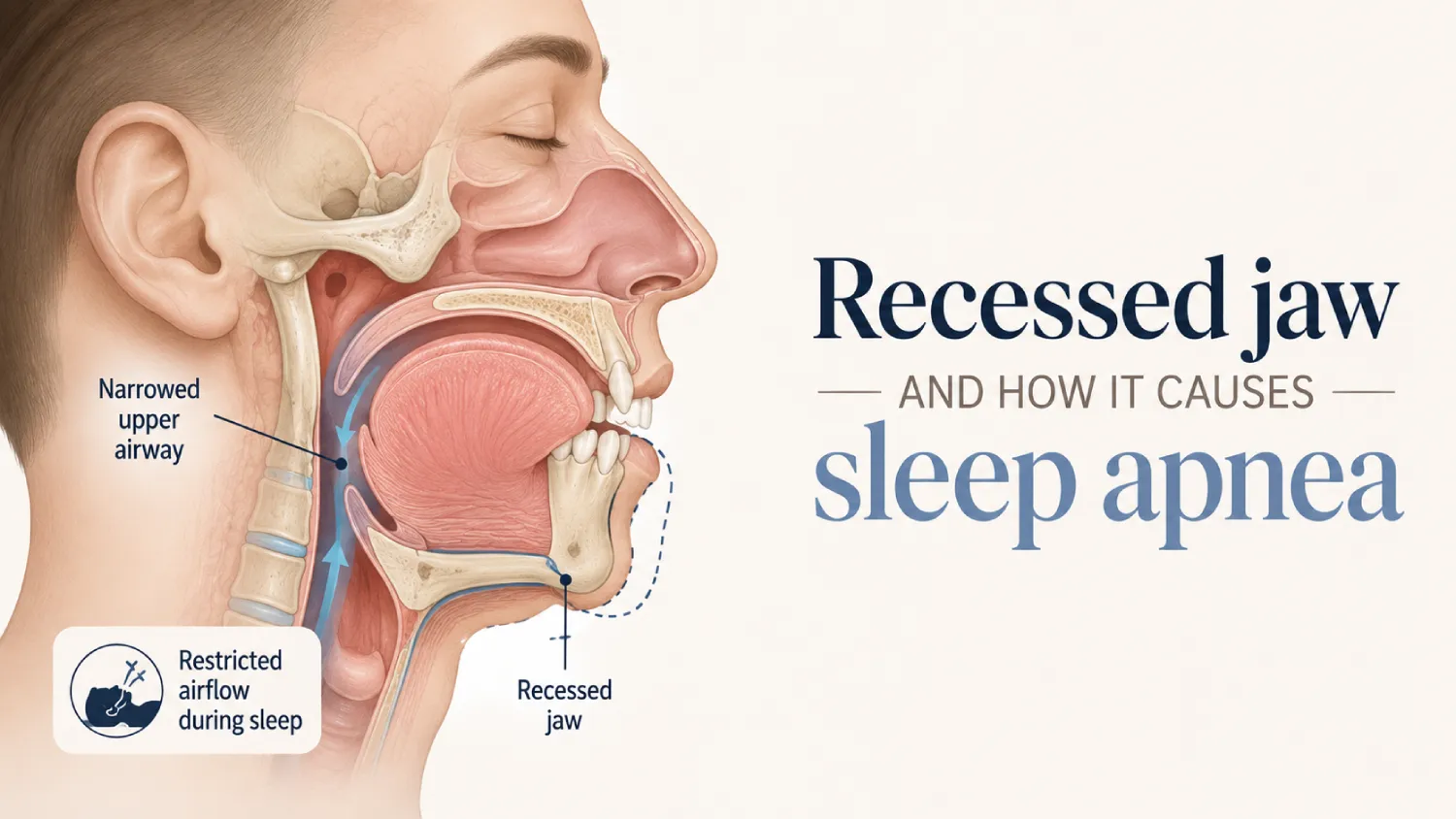
With obstructive sleep apnea, the upper airway narrows or becomes blocked repeatedly during sleep. The person may not fully wake up or remember it, but the body still reacts.
That can leave someone feeling tired even after enough time in bed.
Common signs that poor sleep may be related to sleep apnea include:
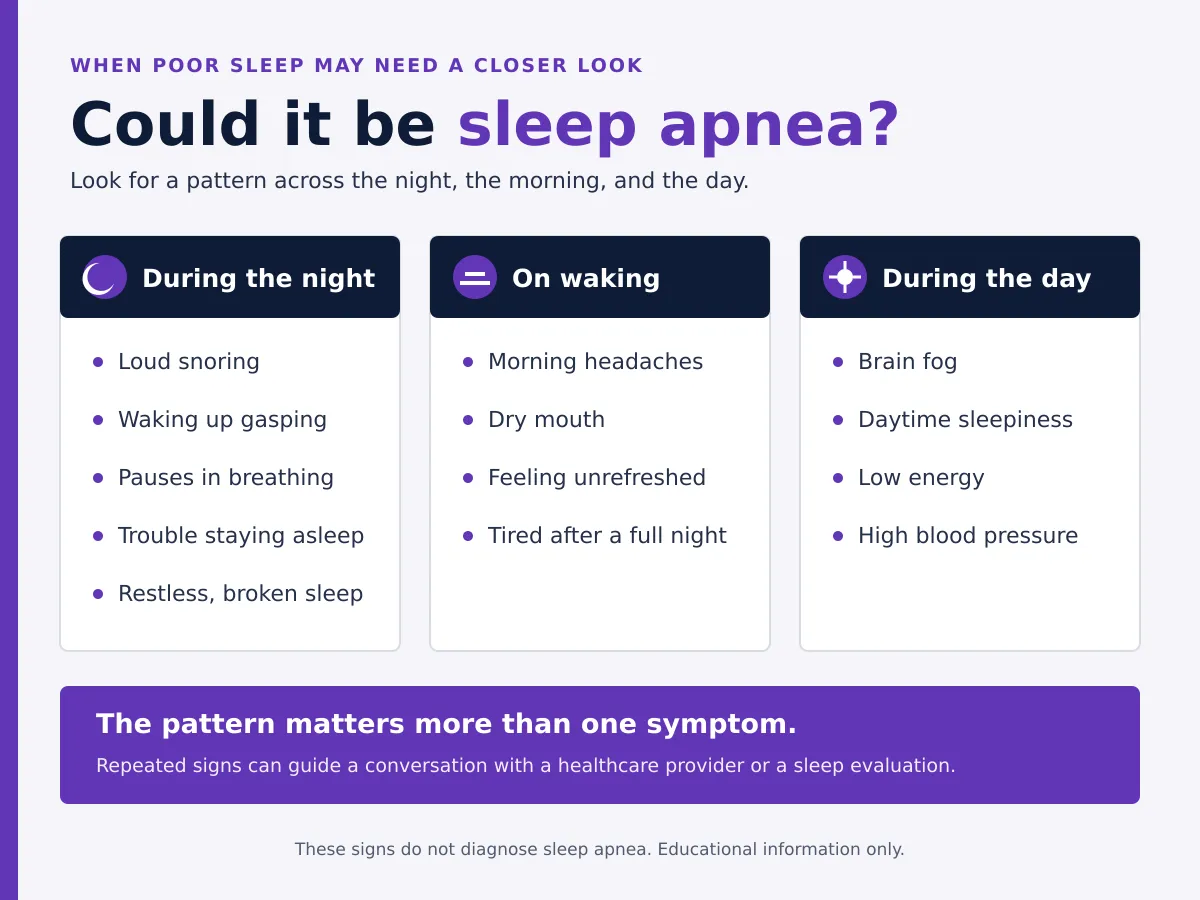
Sleep apnea does not always look the way people expect. Not everyone with sleep apnea is overweight, snores loudly, or falls asleep during the day.
Some people mainly experience insomnia-like symptoms. They may have trouble falling asleep, staying asleep, or waking refreshed. This overlap is sometimes discussed as comorbid insomnia and sleep apnea, or COMISA.
If insomnia treatment has not helped much, or if sleep still feels unrefreshing, it may be worth asking whether sleep-disordered breathing should be evaluated.
Sleep hygiene is a good place to start.
But if you have improved your routine and still feel tired, it may be time to look deeper.
Consider talking with a healthcare provider if you notice:
These signs do not diagnose sleep apnea.
But they can help guide a more informed conversation.
A healthcare provider may recommend a sleep evaluation or sleep study. In many cases, home sleep testing may be an option.
Facial analysis may help identify facial traits associated with elevated sleep apnea risk.
It does not diagnose sleep apnea, but it can support patient education and help guide appropriate evaluation pathways.
Sleep apnea risk is not only about snoring, weight, or age.
Research has shown that craniofacial structure and airway-related anatomy may also play a role. This can include jaw position, facial proportions, airway-related anatomy, and other craniofacial features associated with increased OSA risk.
Facial analysis can make these anatomy-related factors easier to understand.
Soliish is a facial-analysis-driven engagement and workflow platform designed to support sleep-health education, patient engagement, and care coordination. It helps identify facial traits associated with elevated sleep apnea risk and can support conversations about whether further evaluation may be appropriate.
Start with the basics.
Try to improve the parts of sleep you can control:
Give those changes time.
If your sleep improves, great. Keep going.
If poor sleep continues, do not assume it is just stress or willpower. Something else may be interrupting your rest.
For some people, poor sleep is not caused by one issue alone. Insomnia and obstructive sleep apnea frequently occur together, a condition known as COMISA (comorbid insomnia and sleep apnea). People may struggle to fall asleep, stay asleep, and still experience disrupted breathing during the night. This overlap can make symptoms more difficult to recognize.
That is the point where a healthcare conversation matters.
Poor sleep affects more than your mood the next day.
It can influence headaches, eye bags, weight, blood pressure, cholesterol, metabolism, focus, and long-term wellbeing.
Sometimes the cause is routine. Sometimes it is environment. Sometimes it is an underlying sleep-health issue, such as obstructive sleep apnea.
The goal is not to panic. The goal is to notice the pattern.
If your sleep has been off for longer than your schedule can explain, it may be time to ask a better question:
Is something interrupting my sleep that I cannot see?
Soliish supports that first step through FaceX, a sleep wellness engagement experience that uses facial analysis and guided questions to help people explore their sleep health and take the next step toward a real conversation with a doctor.


Poor sleep can cause fatigue, brain fog, irritability, headaches, under-eye puffiness, increased appetite, poor focus, and low energy. Long-term poor sleep may also affect blood pressure, metabolism, and heart health.
Yes. Poor sleep can contribute to morning headaches. If morning headaches happen often, especially with snoring, dry mouth, or daytime fatigue, it may be worth discussing sleep quality with a healthcare provider.
You may be spending enough time in bed but not getting restorative sleep. Stress, poor sleep hygiene, insomnia, pain, hormonal changes, or sleep apnea can all play a role.
Poor sleep can contribute to weight gain by affecting appetite hormones, cravings, energy levels, and blood sugar regulation. It can also make exercise and healthy food choices harder.
Poor sleep can contribute to higher blood pressure over time. Obstructive sleep apnea is one sleep-related condition strongly associated with hypertension.
Sleep apnea can repeatedly disrupt breathing during sleep. Many people do not remember waking up, but the disruptions can prevent restorative sleep and lead to fatigue, morning headaches, brain fog, and high blood pressure.
No. Facial analysis does not diagnose sleep apnea. Soliish helps identify facial traits associated with elevated sleep apnea risk and supports sleep-health conversations. Diagnosis requires clinical evaluation and a sleep study.
Soliish supports ADA-aligned sleep-health workflows through facial-analysis-driven patient engagement, education, and care coordination. It helps dental practices and DSOs improve visibility across the patient journey and build more scalable sleep-health workflows.