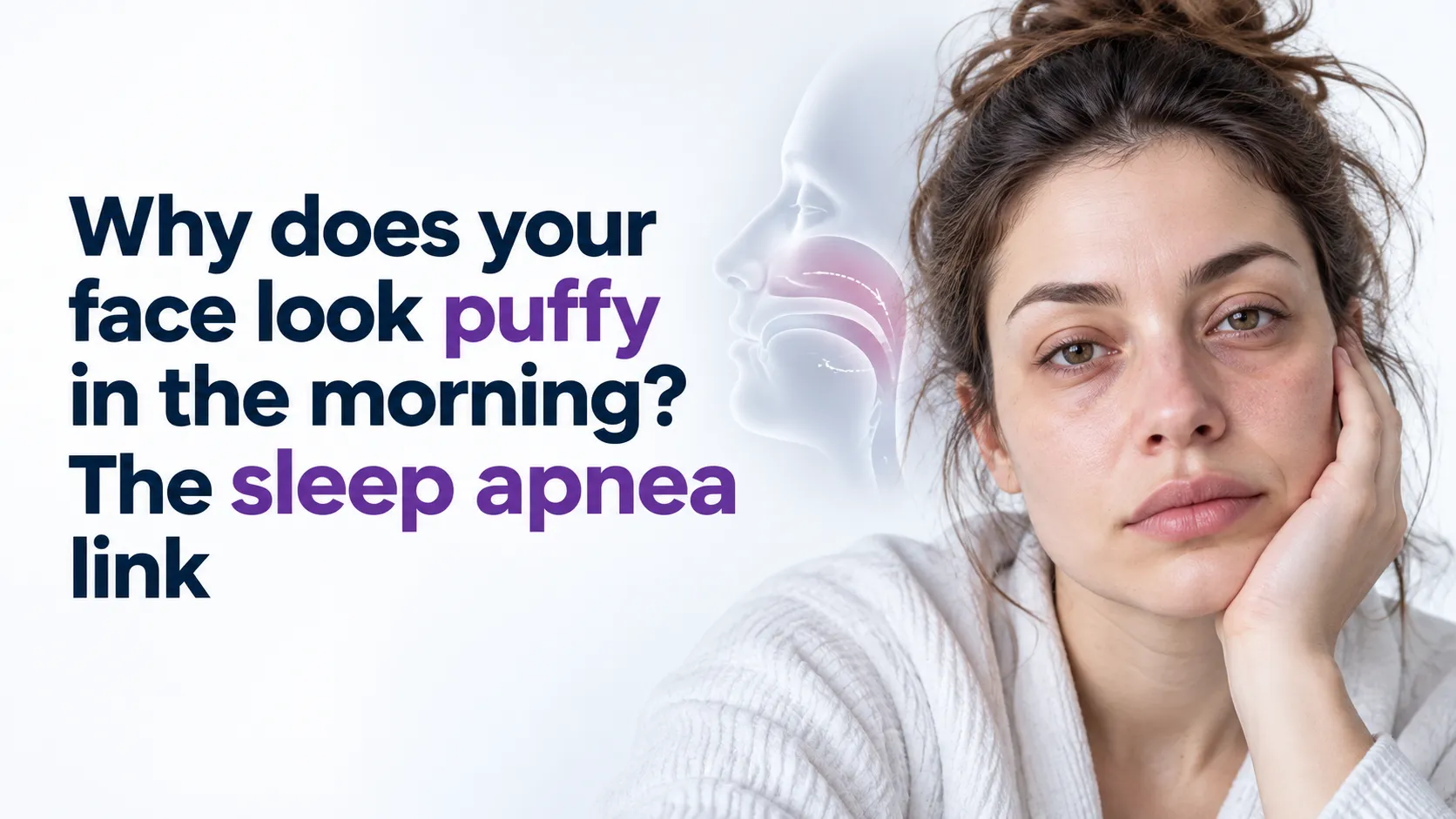
Morning facial puffiness has many causes. One of the less recognized ones is sleep apnea. Here is what the research shows about the connection.
The mirror has probably delivered the news more than once. It is noticed that the face looks softer, fuller, and more swollen than it did the night before. In addition, eyes look smaller because the surrounding tissue is holding fluid. A general sense that the face needs an hour of walking around before it looks like itself again.
Most mornings, this is harmless. A late dinner, a glass of wine, a salty meal, or just the normal fluid shifts that happen when the body spends hours lying flat.
But when morning facial puffiness becomes a regular pattern, especially when combined with fatigue or snoring, it can point to something worth paying attention to. Here is what the research shows about the connection between puffy mornings and sleep apnea.
Why does the face look puffy in the morning in the first place?
Morning facial puffiness is caused by fluid that accumulates in the face during the hours spent lying flat, which has not yet redistributed back to the lower body after waking.
When the body is upright during the day, gravity helps pull fluid from the face and head toward the legs and feet. When the body lies flat during sleep, that gravitational pull disappears. Fluid that normally pools in the lower body gradually shifts upward, including into the face and neck.
This is a normal physiological process. It happens to everyone, every night. The puffiness usually resolves within an hour or two of being upright, as the fluid redistributes.
Factors that make it more pronounced include high salt intake, alcohol consumption, dehydration, hormonal changes, allergies, and sleeping flat without any head elevation. For most people, these are the explanations behind an occasional puffy morning.
The connection is a physiological mechanism called rostral fluid shift, which plays a role in both morning facial puffiness and the development of obstructive sleep apnea.¹
Here is how it works. During the day, fluid tends to accumulate in the legs due to gravity. When a person lies down to sleep, that fluid shifts upward toward the head and neck. This upward shift is called rostral fluid displacement.
In healthy sleepers, this fluid shift is usually not a problem. But in people with certain conditions, including heart failure, kidney disease, and venous insufficiency, the amount of fluid shifting upward is greater, and the consequences are more significant.
Research has shown that overnight rostral fluid shift is associated with increased pharyngeal collapsibility and decreased airway caliber during sleep.² In other words, the fluid shifting into the neck tissues narrows the airway and makes it more likely to collapse. This is one of the mechanisms behind sleep apnea in patients with fluid overload conditions.
A 2018 clinical review in Sleep Medicine Reviews concluded that overnight rostral fluid shift predisposes patients to both obstructive and central sleep apnea, with the type depending on whether the fluid primarily shifts to the neck or the chest.³
The same fluid that makes the face look puffy in the morning may also be narrowing the airway during sleep.
Morning facial puffiness is worth paying closer attention to when it becomes a regular, persistent pattern rather than an occasional occurrence.
Specific signs that raise the possibility of a sleep-related cause include:
The last point is particularly relevant to the sleep apnea connection. People who notice leg swelling during the day that disappears by morning are experiencing the same rostral fluid shift that may be narrowing the airway during sleep.⁴
When several of these signs show up together, the puffy face is often part of a larger pattern worth investigating.
Research has identified several groups where overnight fluid shift and its connection to sleep apnea tend to be most pronounced.
People with cardiovascular conditions. Those with heart failure, hypertension, or venous insufficiency often have greater fluid accumulation in the legs during the day, which means more fluid shifting upward at night. The connection between rostral fluid shift and sleep apnea has been most extensively studied in congestive heart failure populations.²
People with kidney conditions. Reduced kidney function affects the body's ability to manage fluid balance, which can increase overnight fluid shifts.
People who sit for long periods. Sedentary jobs allow more fluid to accumulate in the legs during the day. This fluid then shifts upward during sleep.
People with hormonal changes. Pregnancy and menopause both involve fluid balance changes that can increase morning facial puffiness and may interact with airway dynamics during sleep.
People with sleep-disordered breathing already. The relationship runs both ways. Fluid shift can worsen sleep apnea, and the inflammation associated with sleep apnea can increase vessel permeability and worsen fluid retention.
The right response depends on what is causing the pattern.
For occasional puffiness after a late meal or a drink, simple adjustments usually help. Reducing salt and alcohol intake in the evening. Staying hydrated. Sleeping with the head slightly elevated. Giving the body time to redistribute fluid naturally in the morning.
For persistent morning puffiness, especially when combined with fatigue or other signs of poor sleep, the response needs to go deeper. Addressing underlying contributors to fluid retention, including any cardiovascular, kidney, or hormonal conditions, is often the starting point.
For morning puffiness that appears to be part of a sleep apnea picture, treating the sleep apnea itself has been shown to improve the overall fluid balance. Research has suggested that CPAP therapy can help reduce the systemic inflammation and fluid retention that worsen the puffiness pattern.
Cosmetic approaches like facial massage, cold compresses, and jade rollers can help with the appearance in the short term, but they do not address the underlying cause when fluid shift and sleep-disordered breathing are involved.
For an occasional puffy morning, no action is needed. The face evens out, life continues.
For persistent morning puffiness with no obvious cause, a conversation with a primary care physician is a reasonable starting point. They can evaluate for the common contributors, including cardiovascular, thyroid, and kidney conditions.
For morning puffiness combined with any signs of sleep-disordered breathing, the conversation should include the possibility of a sleep evaluation. The connection between fluid shift, airway collapse, and sleep apnea is well established, and recognizing the pattern early can prevent years of unexplained fatigue and health consequences.
Soliish supports sleep-health engagement and connections to provider-led care within dental practice workflows.
An accessible starting point. FaceX combines an interactive selfie experience with short questions to help identify facial traits associated with elevated OSA risk and support earlier sleep-health conversations. It does not diagnose sleep apnea or replace a sleep study.
A shared reference point. The FaceX summary gives patients and dental teams a starting point for discussing sleep concerns and appropriate next steps. Treatment decisions remain with the clinical care team.
Support for referrals. Soliish connects appropriate patients with independent sleep telehealth providers for clinical evaluation. The pathway is designed to support follow-through from initial engagement to provider-led care.
Workflow integration. FaceX can be introduced through patient-facing links or QR codes, including before a dental visit. The workflow can be planned around the practice’s existing patient touchpoints.
A therapy-agnostic approach. Soliish supports connections to provider-led evaluation. Treatment recommendations are made by the clinical provider based on the patient’s needs.
Morning facial puffiness happens to everyone occasionally, and most of the time it is harmless and resolves within a couple of hours. When it becomes a regular pattern, especially alongside fatigue, snoring, or other signs of poor sleep, it can point to something worth investigating.
Rostral fluid shift is a real physiological mechanism that connects the puffy face in the mirror to the airway dynamics during sleep. The same fluid that makes the face look fuller in the morning may also be narrowing the airway at night.
For readers who recognize the pattern in themselves and want to think through whether sleep apnea might be part of what is happening, connecting with the right healthcare professional is the practical next step. Soliish can help with that conversation.