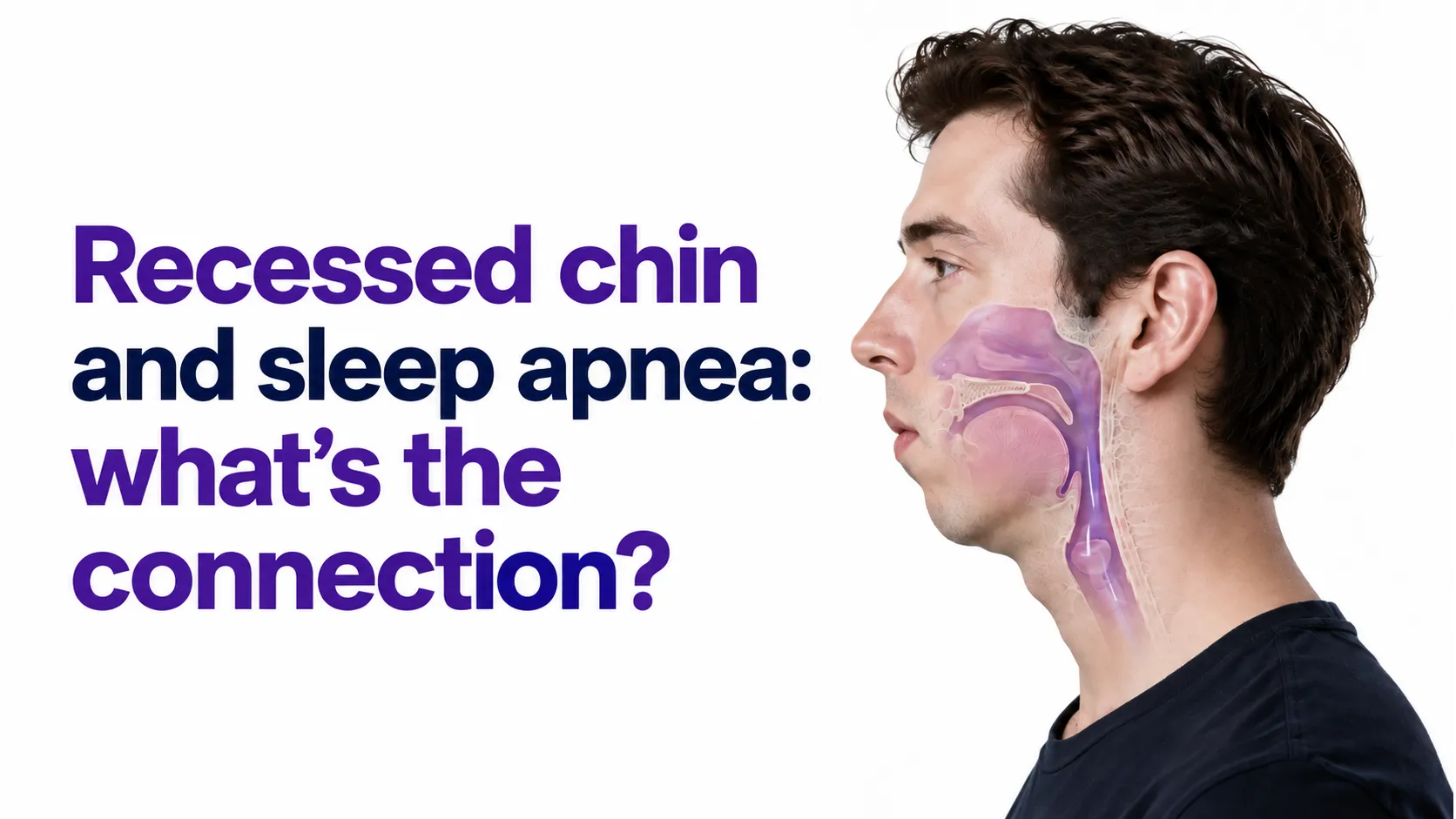
A recessed chin can be more than a cosmetic feature. Here is what the research shows about the connection between chin position and sleep apnea.
Most people think of their chin as a cosmetic feature. Something you notice in photos, or occasionally in the mirror. It rarely feels like a health signal.
But the position of your chin says something about the shape of your airway, and that matters when you sleep. If your chin sits further back than average, your airway may too.
Here is what the connection actually is.
What is a recessed chin?
A recessed chin is a chin that sits further back than the middle of the face when viewed from the side.
Clinicians call the underlying condition mandibular retrognathism, meaning "backward jaw." A cephalometric study of skeletal class II malocclusion patients found that mandibular retrognathism was the primary contributing factor in 68 percent of cases, making it the most common form of jaw misalignment behind a class II bite.¹
The visible chin is just the tip of the mandible, which is the entire lower jaw. When the mandible sits further back than typical, the chin visibly follows.
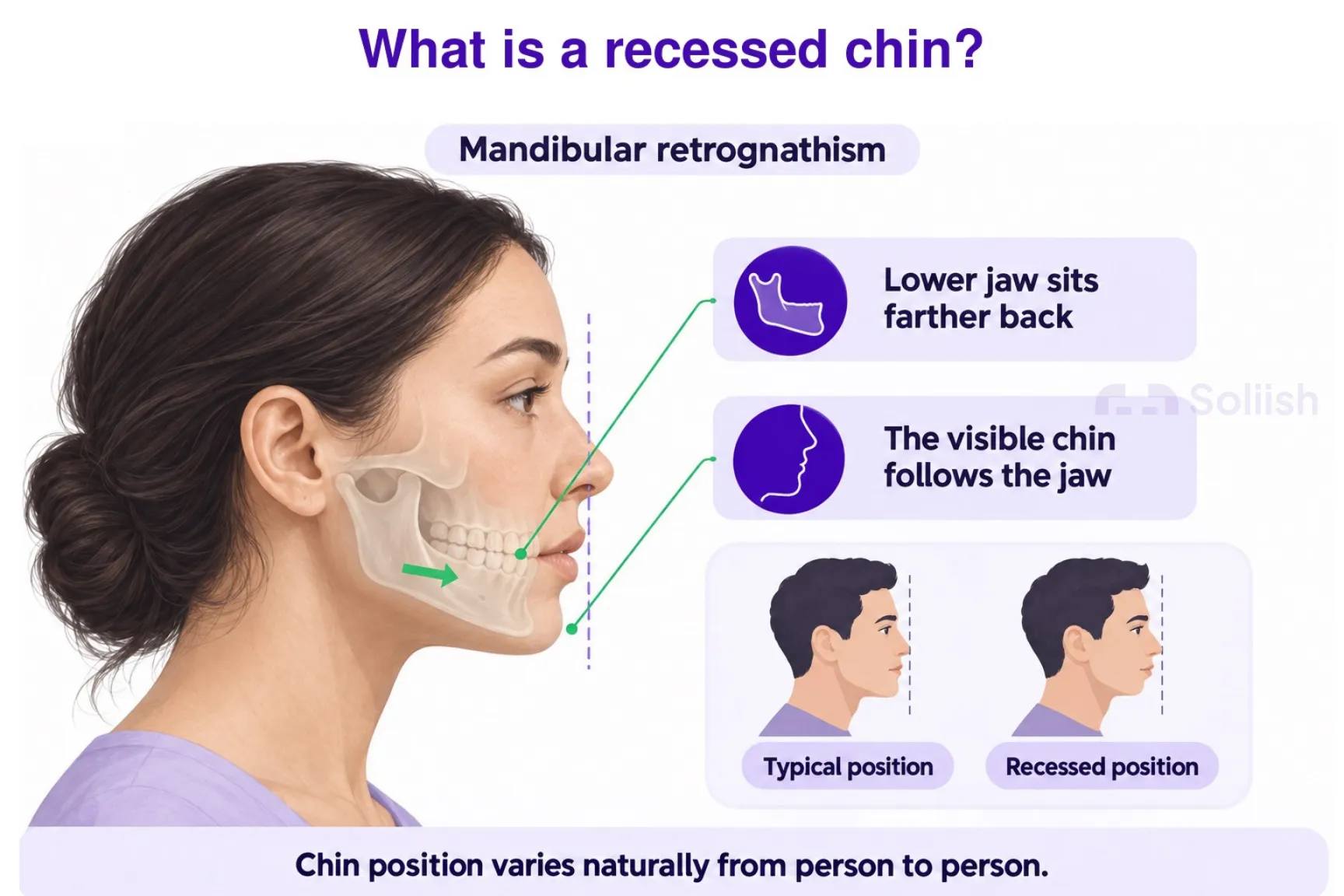
Some people have a very mild recessed chin that is barely noticeable. Others have a more pronounced pattern that shows clearly in profile. Neither is a personal flaw. Chin position is largely determined by how the jaw developed during childhood, and research suggests a strong genetic component behind mandibular retrognathism.²
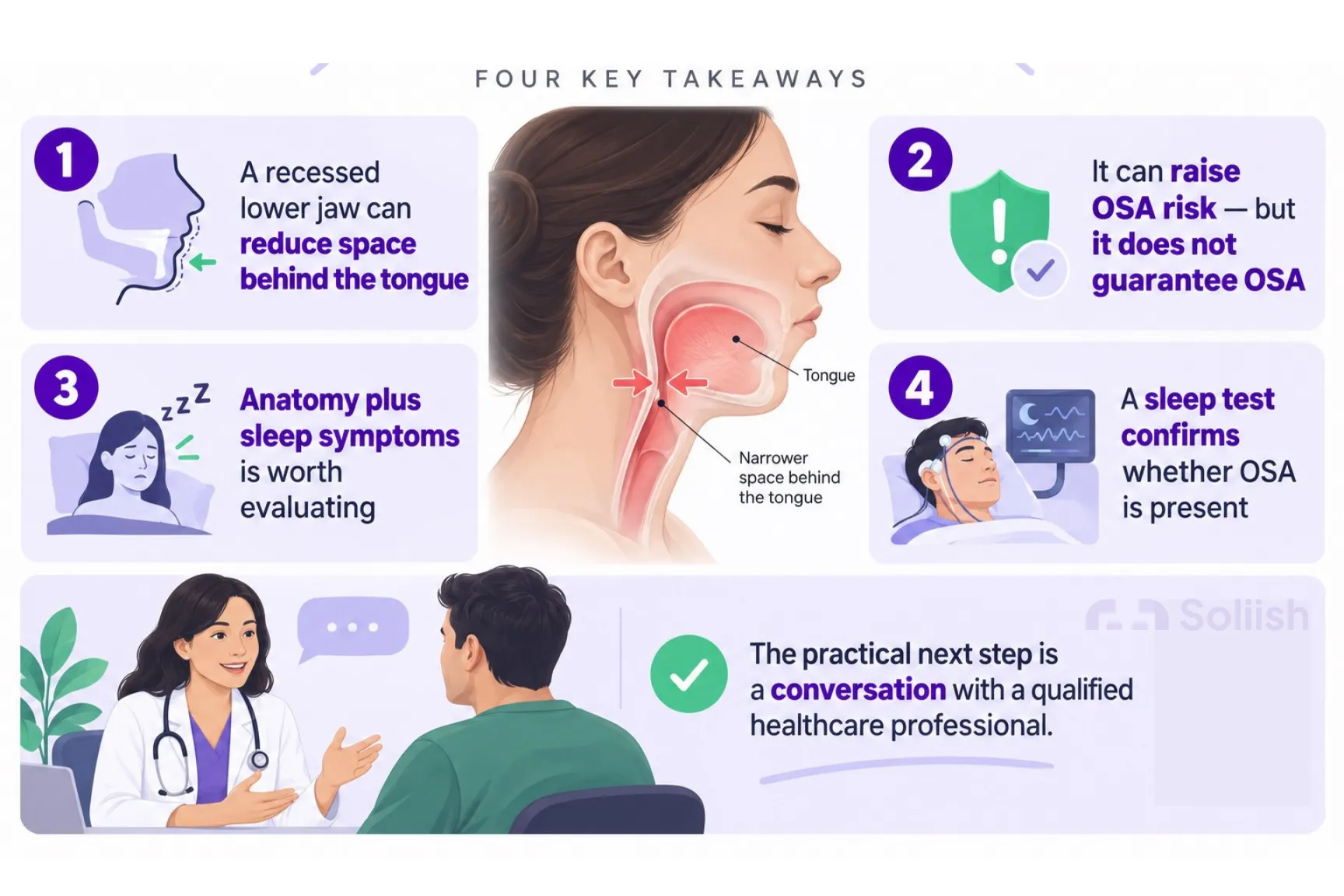
The connection is anatomical. A recessed chin usually reflects a lower jaw that sits further back than typical, and that positioning narrows the space at the back of the throat where breathing happens.³
Here is the mechanism. The tongue is attached to the lower jaw. When the jaw sits further back, the base of the tongue sits closer to the back wall of the throat. During the day, when muscles are active, this crowding does not usually cause problems.
At night, when the muscles relax during sleep, the reduced space becomes a problem. The tongue and soft tissues can more easily fall back and block the airway. That is the mechanism behind obstructive sleep apnea.³
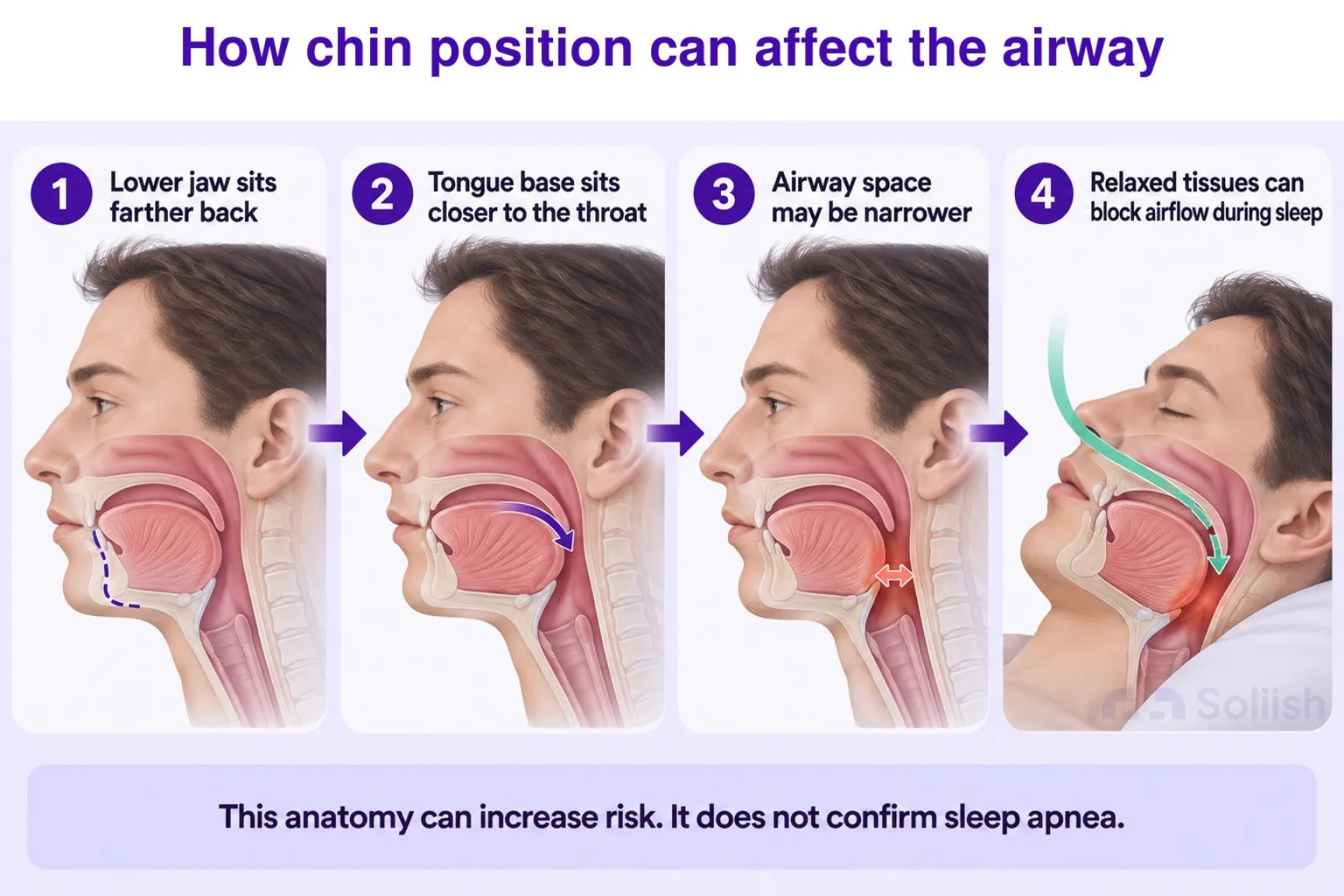
Research has documented this connection consistently. Mandibular retrognathia is listed as one of the most common craniofacial risk factors for obstructive sleep apnea in adults.⁴ People with a recessed chin often have measurably smaller airway dimensions behind the palate and tongue.
The link is real but not deterministic. Not every person with a recessed chin has sleep apnea, and not every person with sleep apnea has a recessed chin.
Anatomy predisposes. It does not guarantee. Some people with a recessed chin have completely normal breathing during sleep. Others develop sleep apnea only later in life, when weight gain or aging adds to the anatomical baseline.
That said, the presence of a recessed chin does raise the anatomical baseline meaningfully. Research suggests that the more pronounced the recessed jaw pattern, the higher the likelihood of sleep-disordered breathing.⁵ Someone with a subtle recessed chin has a lower risk than someone with a significantly recessed one.
The practical takeaway is that a recessed chin is a signal worth paying attention to, especially if any sleep apnea symptoms are also present.
The signs to watch for are the same as for anyone, but they carry more weight when a recessed chin is part of the anatomical picture.
Common signs include:
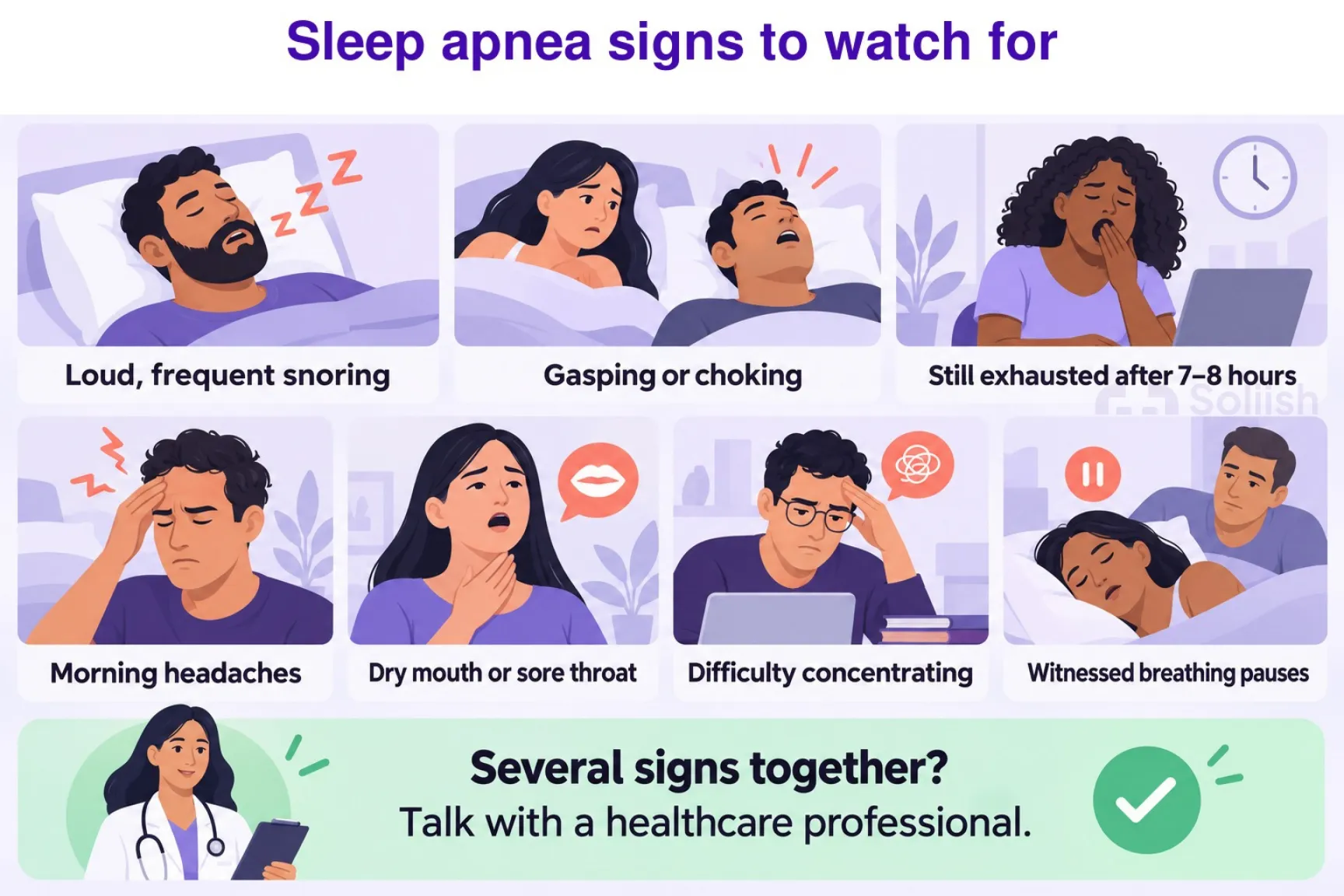
If several of these show up in your daily life, and your chin position fits the recessed pattern, the combination is worth exploring with a healthcare professional.
No. A recessed chin is one risk factor among several, and sleep apnea often involves multiple contributing factors at once.
Other contributors include weight and body composition, tongue size, tonsil size, nasal obstruction, age, muscle tone, and family history. Someone can have a recessed chin without developing sleep apnea, and someone can develop severe sleep apnea without having a recessed chin.
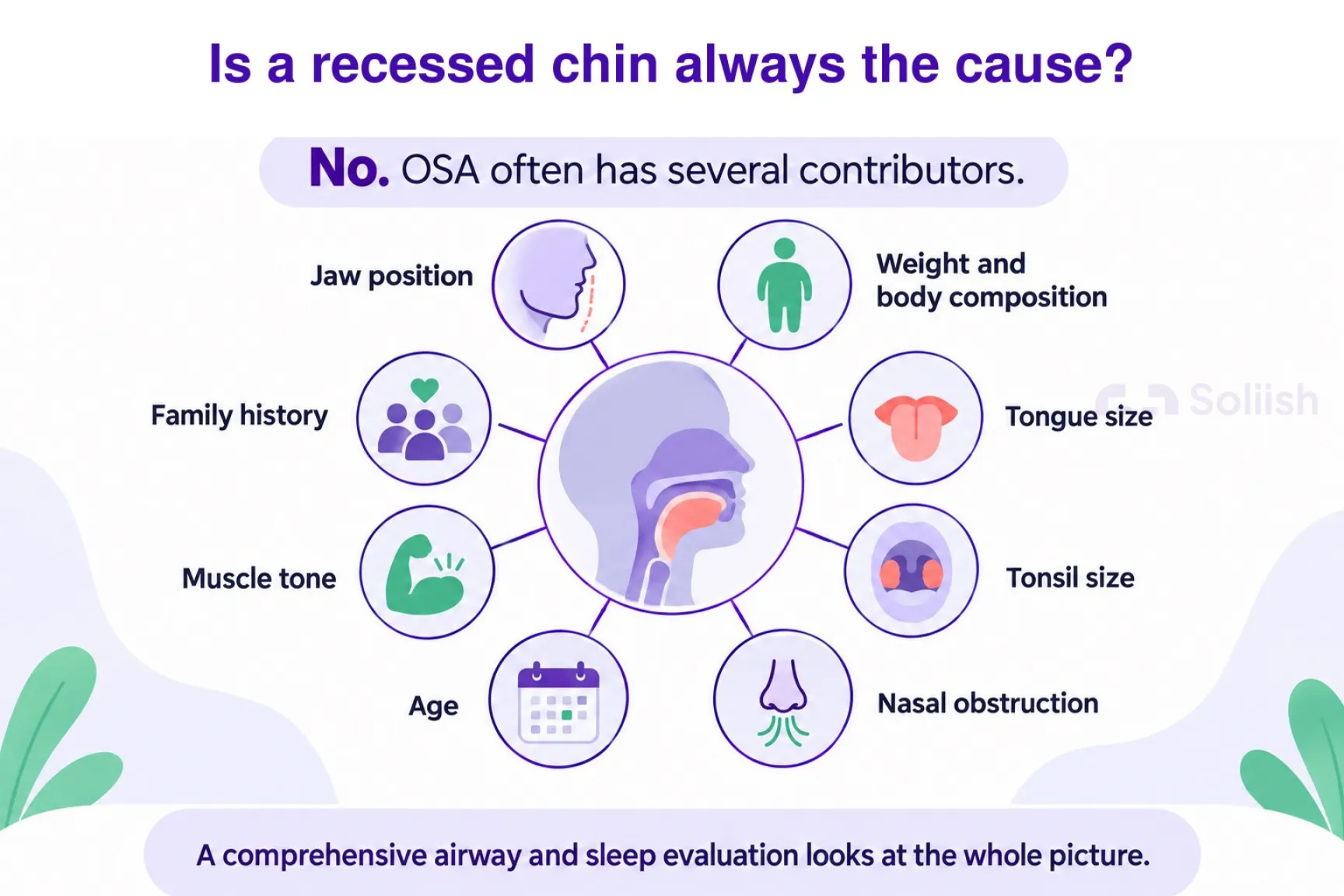
When a recessed chin is part of the picture, it usually combines with other factors rather than acting alone. This is why sleep physicians evaluate the airway comprehensively rather than making judgments from a single feature.
The answer depends on age and the severity of the recession.
In children and teenagers, orthodontic treatment can meaningfully change how the jaw develops. Functional appliances, braces, and in some cases surgical guidance can encourage the lower jaw to move forward during growth. The earlier the intervention, the greater the effect.
In adults, the underlying bone structure is largely set. What can still change includes some soft tissue features, muscle tone, and lip posture. For adults with significant retrognathia and sleep apnea, options include oral appliance therapy (which advances the jaw during sleep without altering the underlying bone), and in more severe cases, orthognathic surgery that permanently repositions the jaw.³
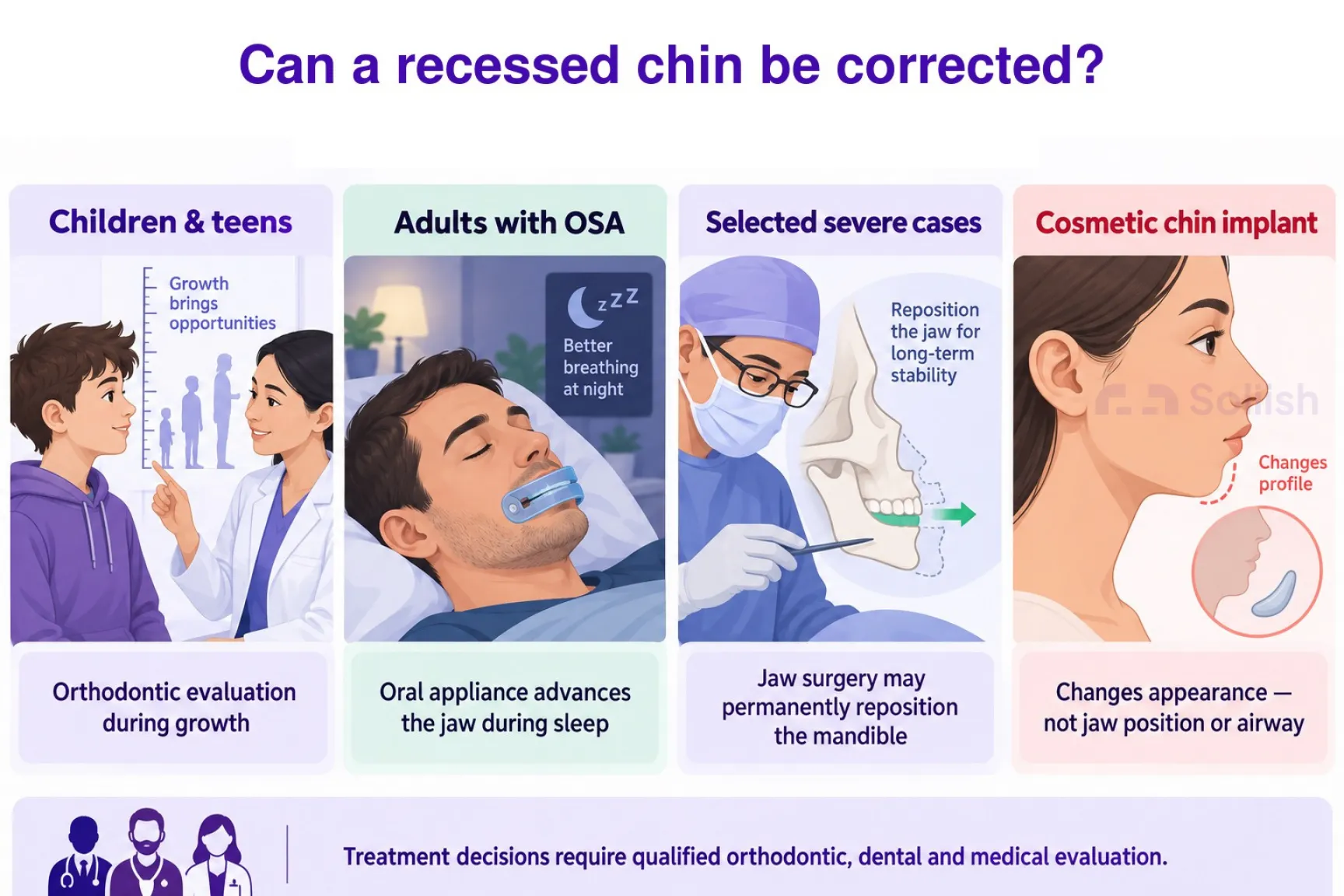
Chin implants are a purely cosmetic option that changes the visible chin without affecting the underlying jaw position or the airway. They can improve appearance but do not address any sleep-related issues.
If you have a recessed chin and any of the sleep apnea signs, the useful next step is a conversation with a healthcare professional who can evaluate both the anatomy and the sleep symptoms.
Sleep physicians can order sleep testing to determine whether sleep apnea is present and how severe. ENT specialists can evaluate nasal obstruction and other upper airway issues. Dentists trained in dental sleep medicine can assess whether an oral appliance might help.
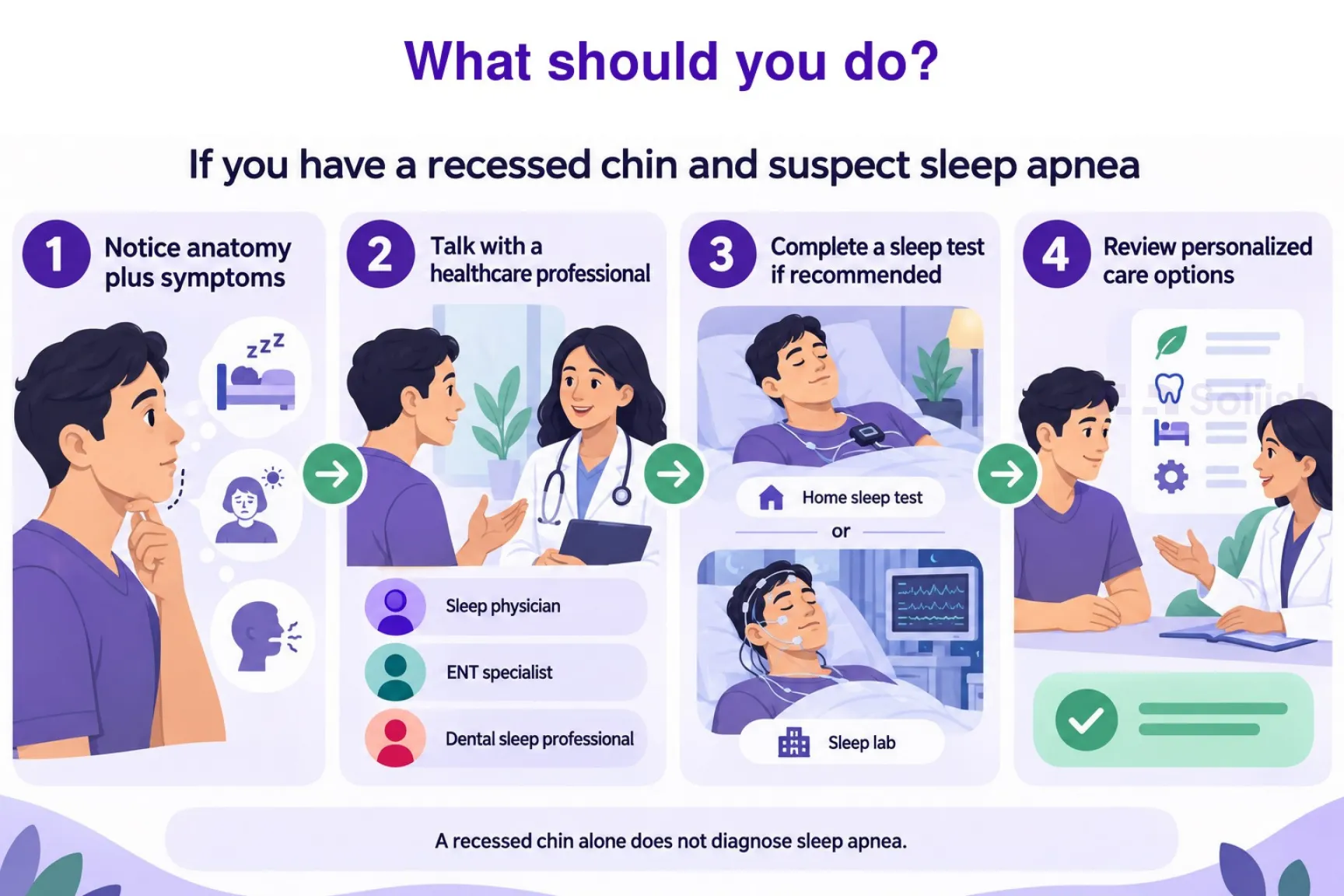
The key is recognizing that a recessed chin, combined with any sleep apnea symptoms, is a combination worth taking seriously. The two often connect through the same underlying anatomy.
A recessed chin reflects a lower jaw that sits further back than typical, and that positioning narrows the airway in ways that make sleep apnea more likely.
Having a recessed chin does not mean you have sleep apnea. But it does mean your anatomical risk is higher, and it is worth knowing about, especially if any sleep-related symptoms are already showing up in your day.
If you have noticed the pattern in yourself and want to think through whether sleep apnea might be part of what you are experiencing, connecting with the right healthcare professional is the practical next step. Soliish can help you explore that conversation.